
`markdown
Understanding PPS Melting Point and High-Temperature Machining Performance
What is Polyphenylene Sulfide (PPS)?
Polyphenylene sulfide (PPS) is a high-performance engineering polymer known for its exceptional thermal and mechanical properties. As an engineer at PlasticCNCPro, I have seen firsthand the versatility of PPS in demanding applications where conventional plastics fall short. PPS features a unique chemical structure composed of aromatic rings linked by sulfide bonds, providing it with remarkable stability and resistance to heat and chemicals. These properties make PPS an indispensable material in industries that require reliable performance under rigorous conditions.
Key Properties of Polyphenylene Sulfide
Thermal Properties
Understanding the thermal properties of PPS is crucial for leveraging its full potential in high-temperature environments. PPS has a melting point of approximately 285°C (545°F), which allows it to maintain its structural integrity under extreme heat. The glass transition temperature of PPS, typically around 85°C (185°F), is also significant as it marks the temperature at which the polymer transitions from a hard, glassy state to a more rubbery form. This high-temperature stability ensures PPS's effectiveness in applications such as automotive and aerospace components, where prolonged exposure to heat is common.
Mechanical and Chemical Properties
PPS is renowned for its mechanical strength and dimensional stability, which are essential in precision engineering applications. The material exhibits excellent chemical and corrosion resistance, making it suitable for environments exposed to harsh chemicals and solvents. In the chemical processing industry, PPS components are often used due to their ability to withstand aggressive conditions without degrading.
PPS Manufacturing and Processing Techniques
PPS Manufacturing Process
The production of PPS involves a polymerization reaction that creates the polymer chains. During manufacturing, additives can be introduced to enhance specific properties, such as electrical conductivity or flame retardancy. These additives allow us at PlasticCNCPro to customize PPS components according to the precise needs of our clients, ensuring optimal performance in their applications.
PPS Machining Techniques
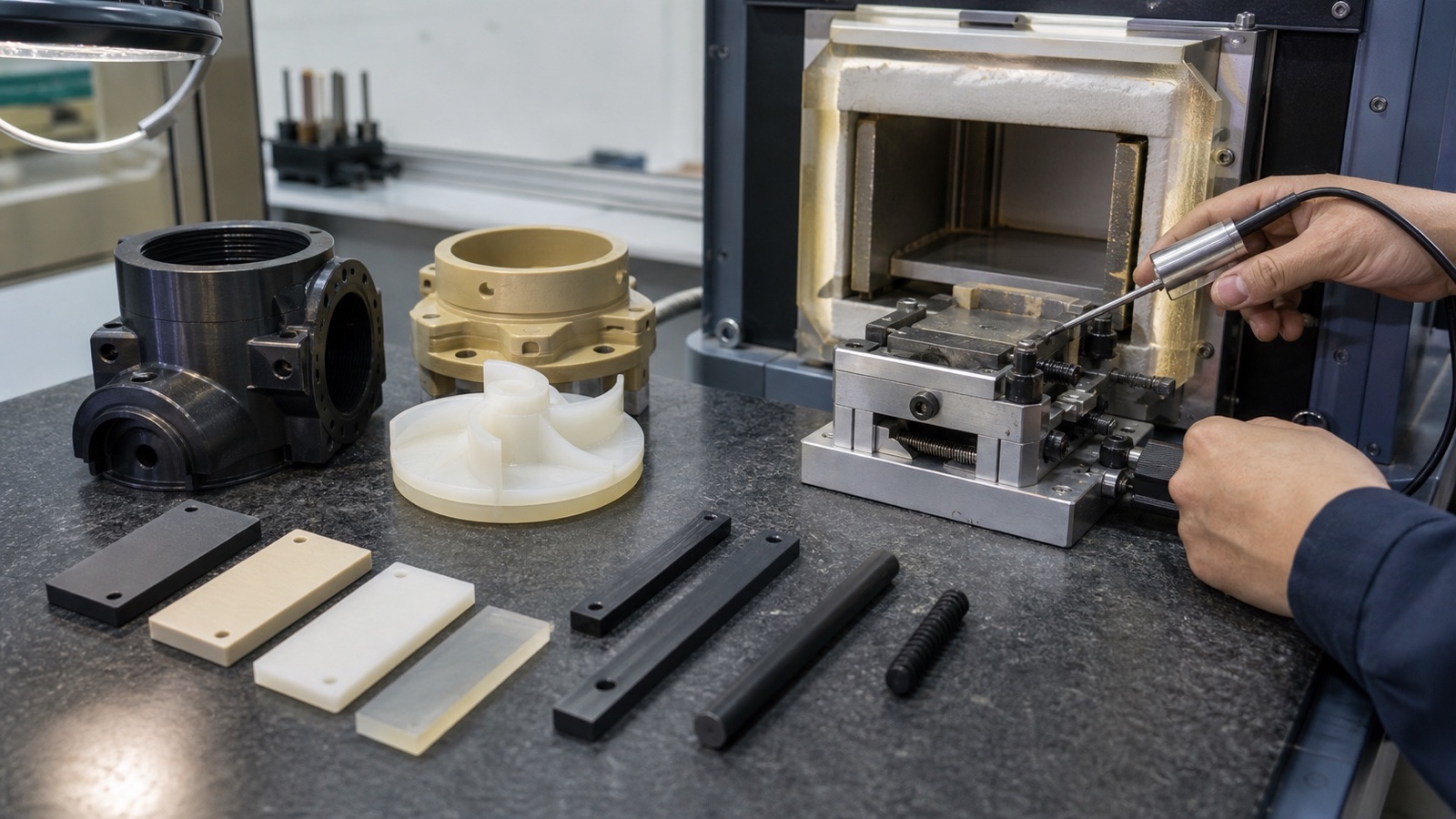
Machining PPS requires specialized techniques to achieve high-temperature machining performance. At PlasticCNCPro, we employ CNC machining processes tailored to the unique characteristics of PPS. The challenges of machining PPS include managing heat generation and ensuring dimensional accuracy under thermal stress. Our solutions involve using cutting tools designed for high-performance polymers and implementing cooling strategies to mitigate heat buildup.
Applications of Polyphenylene Sulfide
PPS is utilized across various industries, each benefiting from its thermal and mechanical properties. In the automotive sector, PPS is used in under-the-hood components that require heat resistance. Aerospace applications involve PPS in high-temperature parts exposed to extreme conditions. Additionally, the electronics industry uses PPS for connectors and housings due to its excellent electrical insulation and stability.
Advantages of PPS in High-Temperature Environments
High Temperature Tolerance
PPS's ability to withstand high temperatures makes it a preferred choice for applications where other polymers might degrade. For instance, compared to polypropylene, which starts to degrade around 100°C (212°F), PPS offers a far superior temperature tolerance, making it ideal for environments where heat exposure is a constant challenge.
Ease of Processing and Sustainability
Processing PPS is relatively straightforward, allowing for efficient manufacturing of complex components. Furthermore, PPS presents sustainability benefits, as it can be recycled and reused, reducing environmental impact and supporting eco-friendly practices.
Frequently Asked Questions
What is the melting point of PPS?
The melting point of PPS is approximately 285°C (545°F). This high melting temperature enables its use in applications requiring prolonged exposure to heat without compromising structural integrity.
At what temperature does polypropylene degrade?
Polypropylene begins to degrade at around 100°C (212°F). This comparison highlights PPS's superior high-temperature capabilities, making it more suitable for applications involving higher heat levels.
What is the glass transition temperature of PPS?
The glass transition temperature of PPS is typically around 85°C (185°F). Understanding this temperature is crucial for applications where the polymer's mechanical properties must be maintained below this threshold.
Conclusion
Polyphenylene sulfide (PPS) stands out for its impressive melting point and high-temperature machining performance, making it an ideal choice for industries requiring reliability under extreme conditions. From automotive to aerospace, PPS's unique properties ensure its effectiveness across various applications.
For those seeking precision-engineered plastic components, we at PlasticCNCPro offer extensive expertise in machining PPS and other high-performance polymers. Contact us today to discuss how we can assist with your specific material and machining needs.
`
RFQ Support
Send Your Drawing for a Quote
Share your 2D drawing, 3D model, material, quantity, tolerance, surface finish, and application details. Our team will review manufacturability and reply with a practical quotation.
Email: info@plasticcncpro.com
Address: 29 Fuxing Road, Dongguan City, Guangdong Province, China