
Engineering Materials Guide
ABS vs. ASA: Which Plastic Is Best for Outdoor Components?
Choosing between ABS and ASA for outdoor projects? We compare UV resistance, mechanical strength, heat performance, printability, and manufacturing considerations to help you select the right plastic for dependable components.
1. Introduction: The Battle for Outdoor Durability
ABS, or acrylonitrile butadiene styrene, is a widely used engineering thermoplastic known for its toughness, machinability, and relatively accessible cost. ASA, or acrylonitrile styrene acrylate, has a similar engineering profile but replaces ABS’s butadiene rubber component with a more weather-stable acrylic rubber.
That distinction matters when a component must survive sunlight, rain, temperature cycling, airborne contamination, and repeated handling. A material that performs well during an indoor test may discolor, embrittle, or lose surface quality after extended outdoor exposure.
ABS at a glance
A practical choice for indoor housings, guards, fixtures, and impact-resistant prototypes where direct sunlight is limited.
ASA at a glance
An outdoor-oriented alternative that preserves appearance and useful mechanical performance more effectively under UV exposure.
Our practical conclusion: both plastics are engineering-grade materials, but ASA is the industry-standard successor to ABS when long-term outdoor appearance and durability are priorities.
2. The Chemistry: Why ASA Was Engineered to Outperform
ABS combines acrylonitrile and styrene with a butadiene rubber phase. The butadiene contributes toughness and impact resistance, but it is also vulnerable to ultraviolet radiation. ASA uses an acrylic rubber phase instead. This preserves much of the familiar ABS-like processing and mechanical behavior while improving resistance to sunlight and weathering.
The difference is not that ASA is immune to aging. All polymers can change after years of heat, UV exposure, moisture, and stress. ASA’s advantage is that its formulation slows the visible and mechanical degradation that makes standard ABS a poor default for continuously exposed parts.
The UV Resistance Factor
Under sunlight, ABS commonly begins with surface yellowing or chalking. Continued exposure can reduce toughness and make thin sections or stressed features more brittle. This can be especially important for snap-fits, clips, protective covers, and mounting tabs.
ASA is formulated to remain more stable in outdoor light. It generally retains color, surface quality, and useful impact performance for longer, which is why it is frequently selected for exterior automotive trim, outdoor enclosures, signs, and equipment covers.
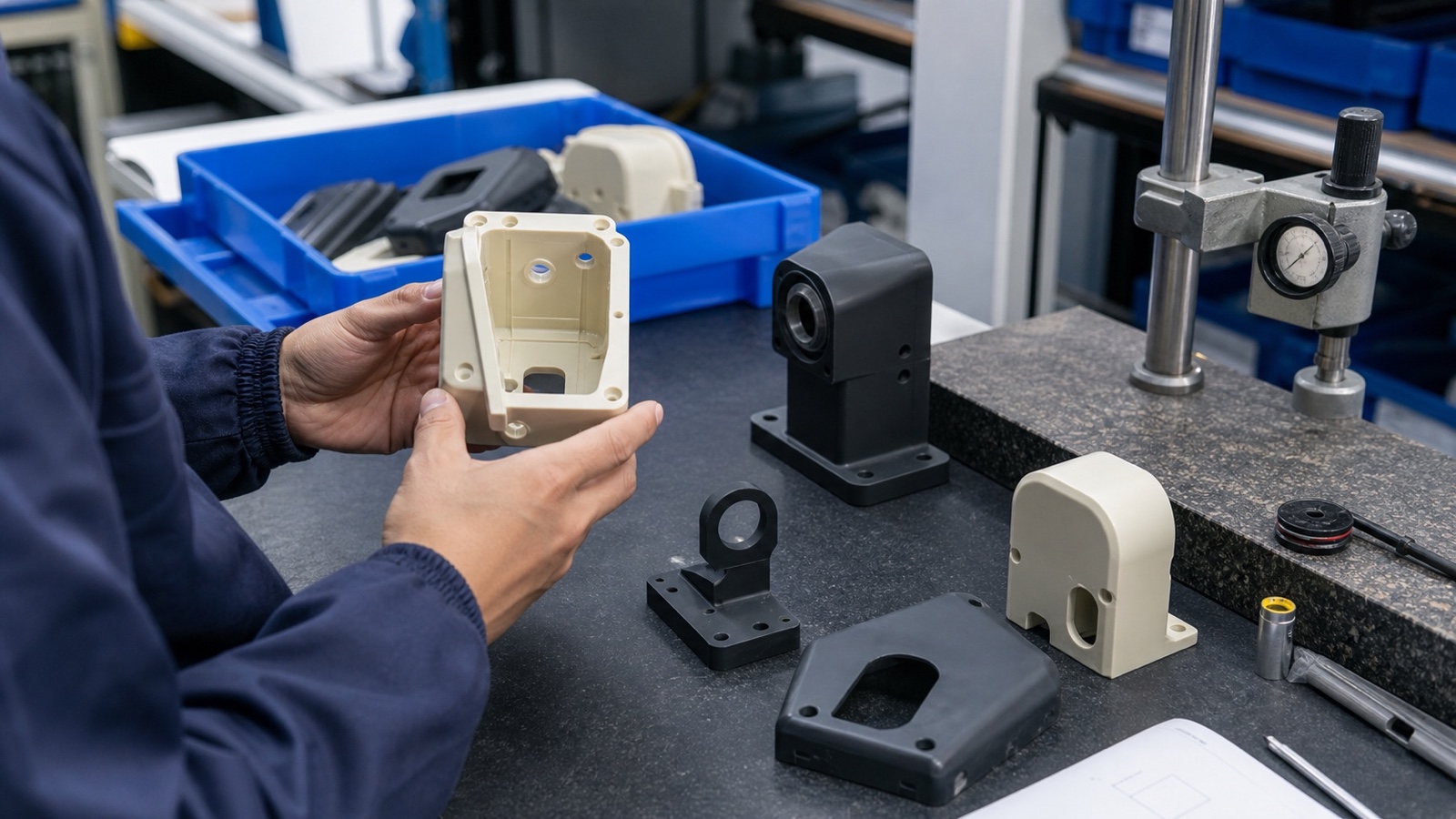
Outdoor material selection should consider UV dose, temperature, stress, color, geometry, and expected service life together.
Design warning
Do not judge outdoor suitability only from a short visual test. A part may look acceptable after several weeks while hidden loss of ductility is already affecting clips, threads, thin walls, or impact-loaded features.
3. Head-to-Head: Material Properties Comparison
ABS and ASA overlap substantially in many indoor applications. The better choice depends on the environment, the stress pattern, and how much value the project places on appearance retention and weathering stability.
| Property | ABS | ASA | Engineering implication |
|---|---|---|---|
| UV stability | Limited without stabilization or protection | Strong outdoor advantage | ASA is preferred for continuous sunlight |
| Impact and toughness | Tough engineering plastic | Broadly similar in many grades | Geometry and grade still matter |
| Heat capability | Suitable for moderate heat | Comparable general range | Check actual grade and load temperature |
| Processing | Machinable and printable, but prone to warping in FDM | Similar process requirements with improved outdoor result | Part geometry and process control remain decisive |
Mechanical Strength and Impact Resistance
ABS and ASA can provide similar tensile strength, stiffness, and impact resistance when comparing appropriate grades. For indoor equipment, covers, brackets, and guards, the difference is often less important than wall thickness, rib layout, fastener design, machining direction, and whether the part is continuously loaded.
ASA becomes the safer selection when that same mechanical load is combined with UV exposure. Even if initial strength is comparable, ABS can lose toughness over time outdoors. For a component that must remain impact-resistant after years of service, weather stability is part of mechanical design.
Heat Resistance
Both ABS and ASA are amorphous thermoplastics with glass transition temperatures in a broadly similar engineering range. They are suitable for many moderate-temperature applications, but neither should be selected for a high-heat environment without checking the specific grade, load, safety factor, and exposure duration.
Car interiors illustrate the design issue. A dark enclosure exposed to direct sun can experience a much higher internal temperature than the surrounding air. For instrument housings, brackets, or trim parts, we recommend evaluating heat, UV, creep, and stress together rather than assuming that a nominal room-temperature property will remain unchanged.
Chemical and Moisture Resistance
Rain and normal humidity are generally manageable for both materials, although water ingress at joints, fasteners, and interfaces can still create a system-level failure. ABS and ASA are not ideal choices for every aggressive chemical environment. Grease, cleaners, fuels, solvents, and concentrated chemicals can affect the surface or cause stress cracking depending on concentration, temperature, and exposure time.
For pumps, valves, laboratory equipment, or chemical-processing assemblies, we evaluate the exact medium and operating conditions before recommending a plastic. UV resistance alone does not make ASA universally chemical-resistant, and a more specialized polymer may be necessary when chemical exposure dominates the design.
4. Practical Considerations: Printing and Manufacturing
The material decision changes depending on whether you are making a one-off printed prototype, a short-run enclosure, or a precision-machined production component. FDM printing highlights warping and layer bonding, while CNC machining emphasizes stock availability, dimensional stability, tool selection, and surface finish.
Printability and Warping
ABS has a reputation for being difficult to print because it shrinks as it cools. Large flat parts can lift at the corners, and temperature differences between layers can produce cracking or distortion. A heated build surface, controlled chamber, correct bed adhesion, and careful cooling strategy are often necessary.
ASA has similar thermal behavior but is often considered slightly more forgiving in practical outdoor-printing workflows. It still benefits from enclosure control and good first-layer preparation. Neither material should be treated as a simple plug-and-play option for large, thin-walled components.
Control thermal gradients
Use an appropriate heated build environment and avoid uncontrolled drafts around the part.
Design for shrinkage
Reduce large unsupported spans and review corners, holes, ribs, and wall transitions.
Validate the actual part
Test the printed geometry, layer orientation, fasteners, and environmental exposure—not just a material coupon.
Fumes and Safety
Both ABS and ASA can produce volatile organic compounds and noticeable odors during heated filament printing. We recommend adequate ventilation, sensible printer placement, and adherence to the filament manufacturer’s handling guidance. An enclosed printer can improve process control, but it does not remove the need to manage emissions responsibly.
Workshop practice
Treat ventilation as part of the manufacturing process, not an optional comfort feature. Machining finished plastic parts also requires appropriate chip control, housekeeping, and process-specific safety practices.
Post-Processing
Both ABS and ASA can be sanded, painted, drilled, and mechanically finished. ABS is widely known for solvent vapor smoothing, which can reduce visible layer lines and improve the surface of suitable printed parts. ASA can also be post-processed, but the correct solvent, process parameters, ventilation, and surface preparation should be confirmed before production use.
For machined components, surface quality depends on the material grade, cutter condition, fixturing, feeds, speeds, and geometry. At PlasticCNCPro, we review the drawing and application before selecting a machining route, especially when a customer needs tight dimensions, threaded features, clean edges, or repeatable surface appearance.
5. Decision Matrix: When to Choose Which
The right material is not determined by the name on the spool or the lowest raw-material cost. We recommend starting with exposure level, required service life, mechanical loading, manufacturing method, and total project cost.
Why Choose ASA?
Choose ASA when a part will remain outdoors or near strong sunlight and must retain its appearance and toughness. Typical examples include outdoor signage, automotive exterior parts, weather-exposed equipment covers, garden equipment, sensor housings, and brackets installed on the outside of a machine.
ASA is especially compelling when replacing the part later would be expensive or inconvenient. A small material premium can be reasonable when it reduces premature discoloration, brittleness, warranty risk, or field-service work.
Why Choose ABS?
Choose ABS for indoor enclosures, high-impact indoor gear, machine guards, fixtures, and cost-sensitive prototypes where direct UV exposure is limited. ABS has a broad supply base, familiar processing behavior, and useful toughness for many engineering applications.
ABS can also be suitable for a protected outdoor installation if the part is shielded from sunlight, painted with a suitable protective coating, or expected to have a short service interval. The important point is to document that environmental assumption rather than leave it implicit.
The “Wait, What About PETG?” Factor
PETG is often considered a middle-ground alternative for outdoor use. It can be easier to print than ABS-family materials and offers useful moisture resistance and toughness. However, its performance depends strongly on grade, UV stabilization, temperature, creep, surface requirements, and the specific design.
If outdoor appearance retention and long-term UV exposure are central requirements, ASA is usually the more direct comparison to ABS. If ease of printing and general-purpose prototyping are more important, PETG may deserve evaluation alongside both materials.
6. Industrial Perspective: Injection Molding vs. 3D Printing
In filament-based extrusion, the process introduces layer interfaces, thermal gradients, and visible anisotropy. These factors can influence impact strength, dimensional accuracy, and environmental durability. A successful material choice still needs to be matched with part orientation, infill or wall strategy, support removal, and post-processing.
Injection molding provides a more uniform, repeatable production route once tooling and process conditions are established. It is often appropriate for larger volumes, consistent geometry, and repeatable exterior parts. For prototypes, low-volume production, replacement parts, and complex one-off geometries, CNC machining can provide a practical alternative without committing to molding tooling.
We at PlasticCNCPro help customers compare the material and manufacturing route before production. For a custom machined plastic component, we can review a drawing, CAD model, or sample and consider tolerance, geometry, surface finish, quantity, and application conditions together.
A practical sourcing sequence
-
1
Define exposure
Record sunlight, moisture, temperature, chemicals, loading, and expected service duration.
-
2
Choose the process
Compare printing, CNC machining, and molding based on quantity, tolerance, and geometry.
-
3
Validate the assembly
Check fasteners, interfaces, movement, thermal expansion, and realistic environmental exposure.
7. Frequently Asked Questions
Is ASA or ABS better for outdoor use?
ASA is generally better for continuous outdoor use because it offers significantly better UV and weathering stability. ABS remains suitable when the part is protected from sunlight or when outdoor exposure is brief and cost is the primary concern.
How long will ASA actually last outside compared to ABS?
There is no single service-life number because results depend on climate, UV intensity, color, geometry, stress, grade, and exposure cycles. ASA will generally retain appearance and toughness longer than standard ABS, but a reliable estimate requires the actual application and validation conditions.
Can I use ASA and ABS together in the same assembly?
Yes, in many assemblies they can be used together. Review fit, thermal expansion, fastener loads, surface contact, chemical exposure, and whether the ABS portion is shielded from UV. Avoid assuming that similar appearance means identical long-term behavior.
Is ASA significantly more expensive than ABS?
ASA can carry a material premium, but the difference varies by grade, supplier, form, quantity, and manufacturing method. Compare total cost, including finishing, replacement, field service, and expected life—not only the initial material price.
Does ASA smell as bad as ABS when printing?
ASA can produce noticeable odors and VOCs during heated printing, much like ABS. Good ventilation, appropriate printer enclosure practices, and responsible workspace controls are necessary for both materials.
8. Conclusion: The Verdict
ABS and ASA share useful mechanical characteristics, and both can produce capable engineering components when the design and process are controlled. ABS is a sensible option for indoor enclosures, fixtures, protective parts, high-impact indoor gear, and cost-sensitive prototypes.
For outdoor components, ASA is usually the better choice. Its acrylic rubber phase gives it a meaningful advantage against UV-driven yellowing, surface degradation, and long-term embrittlement. That makes it a strong candidate for outdoor signage, automotive exterior components, garden equipment, and exposed machine covers.
Our recommendation is simple: choose ASA when exposure level and service life lead the decision; choose ABS when the part is protected, the application is primarily indoors, or budget and fast prototyping matter more.
If you are developing a custom plastic part, material selection should be reviewed alongside tolerances, geometry, quantity, finish, and manufacturing route. At PlasticCNCPro, we support global B2B customers with prototypes, low-volume parts, and repeat production through precision CNC milling, turning, drilling, tapping, threading, and related machining operations.
Send a 2D drawing, 3D model, sample, quantity, tolerance, and application details for an engineering review.
Project inquiry
Need help selecting ABS, ASA, or another engineering plastic?
Share your drawing, CAD model, sample, material requirement, quantity, tolerance, and application conditions. We will review manufacturability and recommend a practical production route.