
Engineering polymer selection guide
PET vs PBT for Precision Components: Properties, Processing & Selection Guide
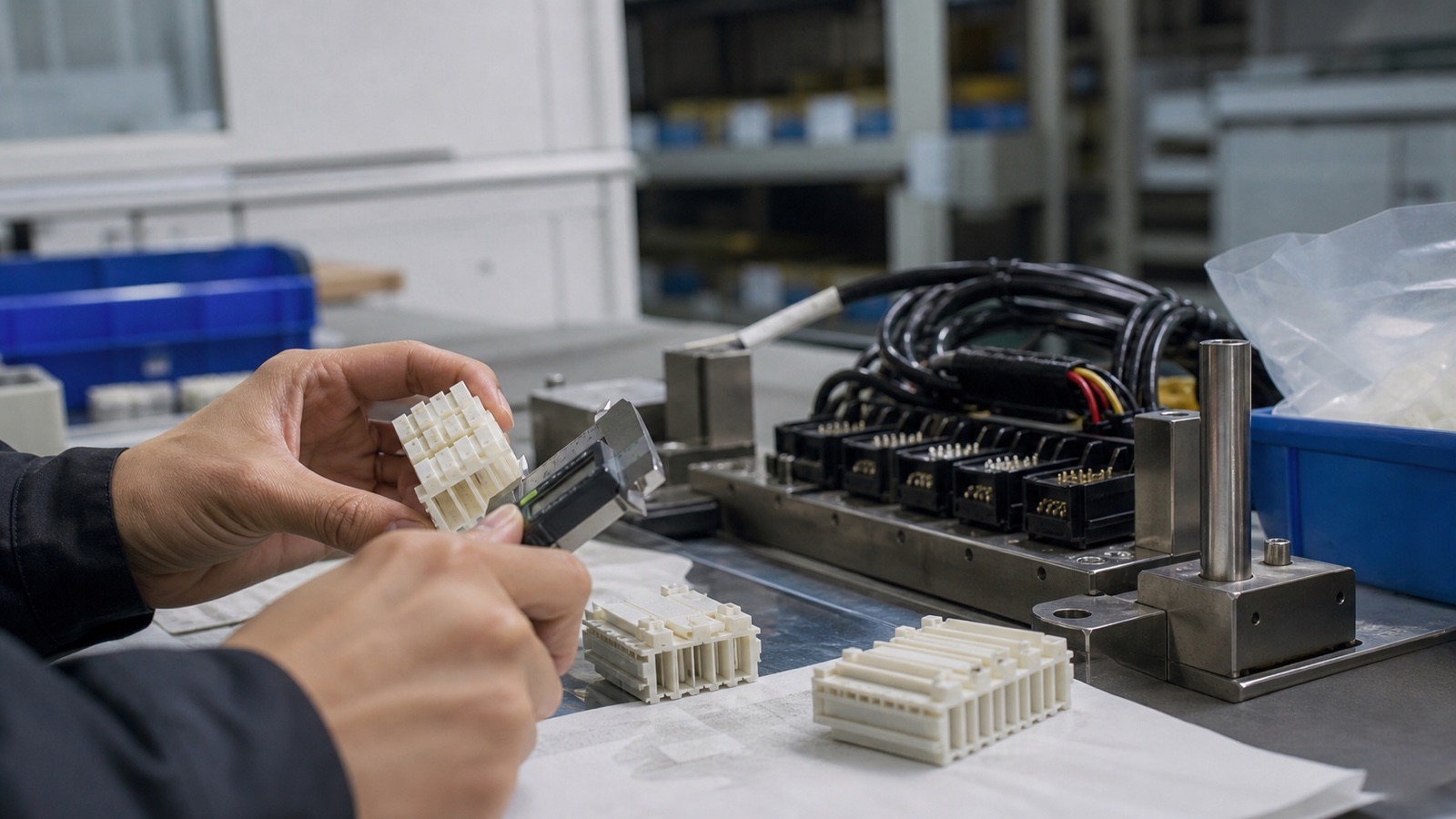
PET and PBT are closely related engineering polyesters, yet they behave differently in molding, moisture exposure, thermal cycling, and tight-tolerance applications. We compare their structure, properties, processing requirements, and practical use cases so you can select the more dependable material for precision components.
For precision parts, the best polyester is not simply the one with the highest headline strength. We evaluate crystallization, moisture history, thermal cycling, machining or molding method, and the tolerance stack of the complete assembly.
Molecular Structure and Crystallization Differences
PET and PBT are thermoplastic polyesters with aromatic rings in their molecular backbone. The important difference is the length of the glycol segment between ester groups. PET uses ethylene glycol, while PBT uses the longer butylene glycol segment. That apparently small structural change gives PBT greater chain mobility and faster crystallization during cooling.
PET generally crystallizes more slowly and often needs higher mold temperatures or carefully managed cooling to develop a stable crystalline structure. PBT crystallizes quickly, which supports shorter molding cycles and makes it easier to achieve a consistent molded structure in many geometries. However, rapid crystallization can also create directional shrinkage and anisotropy that must be accounted for in the tool design.
PET structure
PET can provide high stiffness and good dimensional retention, especially when the grade and thermal history are controlled. Its slower crystallization makes processing conditions particularly important for thin walls, inserts, and tight-tolerance molded features.
PBT structure
PBT develops crystallinity rapidly and is often selected for efficient injection molding, electrical housings, connectors, and moving components. Its processing window is practical, but shrinkage and fiber orientation still require engineering control.
Why it matters for tolerance control
A part can leave the mold within tolerance and move later as it absorbs moisture, relaxes residual stress, or experiences a different temperature. We therefore recommend validating critical dimensions after conditioning and thermal exposure, not only immediately after production.
Mechanical and Thermal Property Comparison
The table below provides representative ranges for unfilled injection-molding grades. Actual values vary with molecular weight, crystallinity, test method, conditioning, reinforcement, and supplier formulation. We use these figures as an initial screening tool, then confirm the selected grade against its technical datasheet and application temperature.
| Property | PET, typical unfilled grade | PBT, typical unfilled grade | Precision-component relevance |
|---|---|---|---|
| Tensile strength | Approximately 50–75 MPa | Approximately 45–65 MPa | Useful for load screening, but sustained load and temperature are equally important. |
| Tensile modulus | Approximately 2.2–3.0 GPa | Approximately 2.0–2.8 GPa | Higher stiffness helps resist deflection in guides, brackets, and sensor supports. |
| Heat deflection temperature | Often approximately 65–80°C at standard stress | Often approximately 55–75°C at standard stress | Use the grade-specific value; reinforced grades can be substantially higher. |
| Continuous-use capability | Moderate; design depends strongly on load and environment | Moderate; commonly used in under-hood and electrical systems with suitable grades | Do not substitute HDT for long-term creep data. |
| Creep resistance | Good relative to many commodity plastics; decreases with heat and humidity | Good at ambient conditions; reinforced grades improve load retention | Check stress relaxation around clips, press fits, gears, and bolted joints. |
Strength is only one part of precision performance
For a gear, bushing, connector body, or sensor carrier, stiffness and creep resistance can matter more than short-term tensile strength. A component that slowly deflects can change gear backlash, alter a connector contact position, or reduce the accuracy of an optical or laboratory assembly without showing visible damage.
When a part operates near its thermal limit, we review the actual stress level, duty cycle, exposure time, and support geometry. For demanding loads, glass-filled PET or PBT may be more appropriate than an unfilled grade, although reinforcement can increase anisotropy and complicate machining or molding tolerances.
Chemical Resistance, Moisture Absorption, and Dimensional Stability
Both PET and PBT offer useful resistance to oils, greases, many hydrocarbons, and common industrial fluids. Neither should be approved from a generic “chemical resistant” label alone. Concentration, temperature, exposure time, mechanical stress, and the presence of molded-in stress can change the result.
Both polyesters can be affected by hydrolysis. During processing, insufficient drying can reduce molecular weight and cause brittle parts. In service, hot water, steam, or high humidity combined with elevated temperature can gradually reduce performance. Hydrolysis-resistant PBT and PET compounds are available, but the correct grade must be verified for the real exposure.
| Environment | PET tendency | PBT tendency | Engineering action |
|---|---|---|---|
| Humid service | Low moisture uptake compared with nylon, but dimensions can still shift. | Low moisture uptake and generally stable electrical behavior. | Condition parts before final inspection when tolerance is critical. |
| Hot water or steam | Hydrolysis risk increases with temperature and time. | Hydrolysis risk is significant for unsuitable grades. | Use a validated hydrolysis-resistant grade or select another polymer. |
| Oils and hydrocarbons | Generally good, subject to temperature and stress. | Generally good, with formulation-specific limits. | Test the exact fluid and compound for stressed parts. |
| Strong alkalis and some solvents | Potential attack, stress cracking, or loss of properties. | Potential attack, particularly at elevated temperature. | Obtain compatibility data before release. |
Dimensional stability note
PET and PBT usually absorb less moisture than many polyamides, which is helpful for precision components. Low absorption does not mean zero dimensional movement: crystallinity, fiber orientation, thermal expansion, residual stress, and humidity conditioning all contribute to the final tolerance.
Injection Molding and Processing Considerations
PET and PBT are both moisture-sensitive during melt processing. Pellets should be dried according to the compound supplier’s instructions, using a controlled drying system that reaches the required dew point. Processing wet material can produce hydrolytic degradation, silver streaks, lower strength, and unstable dimensions.
Dry the resin consistently
Follow the grade datasheet for drying temperature, residence time, allowable moisture, and hopper handling. Repeated exposure to ambient humidity can undo otherwise correct preparation.
Control mold temperature
PBT generally crystallizes readily at practical mold temperatures, while PET often benefits from a higher and more carefully controlled mold temperature to achieve stable crystallinity and surface quality.
Account for shrinkage direction
PBT’s fast crystallization and glass reinforcement can produce directional shrinkage. Gate location, flow length, wall thickness, cooling balance, and fiber orientation influence connector and housing dimensions.
Validate the full cycle
Shorter cycles are often possible with PBT because it crystallizes quickly. PET may require more thermal control, but the correct cycle is the one that produces stable dimensions and properties, not simply the shortest cycle.
What about CNC machining?
For prototypes, low-volume orders, replacement parts, and complex geometries, CNC machining can avoid the lead time and tooling investment of injection molding. At PlasticCNCPro, we review material condition, wall thickness, clamping, tool access, and tolerance requirements before machining PET or PBT components. The same material behavior still matters: thin sections can move after machining if residual stress is released.
Material Modifications and Reinforcement Options
The PET-versus-PBT decision is often made between compound families rather than base polymers. Additives can change stiffness, impact behavior, flame performance, friction, shrinkage, color stability, and chemical resistance. We recommend specifying the required performance first, then selecting a commercially available grade that meets it.
Glass-fiber reinforcement
Glass fiber increases stiffness, strength, creep resistance, and often heat performance. The trade-offs include greater anisotropic shrinkage, possible warpage, a more abrasive material, and a surface that may show fiber texture.
Impact modification
Impact-modified grades improve toughness for clips, housings, and parts exposed to shock. This can reduce stiffness or alter chemical and thermal performance, so the impact benefit should be balanced against dimensional requirements.
Flame-retardant compounds
Flame-retardant PET and PBT grades are common in electrical and electronic components. The additive package may affect flow, weld-line strength, surface appearance, and long-term aging; use the exact grade’s data rather than assuming the base resin behavior.
Copolymer and specialty approaches
Copolymerization and tailored additives can improve processing, hydrolysis resistance, impact performance, or crystallization control. These grades can be valuable when standard PET or PBT cannot satisfy the complete design envelope.
Key Applications in Precision Components
PET and PBT are used across industrial, automotive, electrical, and laboratory systems. The preferred option depends on whether the primary challenge is stiffness, cycle time, electrical insulation, dimensional control, impact, temperature, or fluid exposure.
Automotive sensors and under-hood components
PBT is frequently considered for sensor housings, connector bodies, brackets, and electrical protection components because of its moldability, electrical properties, and availability in reinforced and flame-retardant grades. For elevated-temperature or fluid-exposed locations, the exact compound and hydrolysis performance must be validated.
Electrical connectors and insulation parts
Both materials can support connector and insulating applications. PBT’s fast crystallization is useful for high-volume molding, while flame-retardant and glass-reinforced versions can be selected for stiffness and electrical safety requirements.
Gears, guides, and wear-related components
PET can be attractive where stiffness, low moisture movement, and dimensional stability are important. PBT can also be used for precision moving components when the grade provides suitable friction, wear, fatigue, and creep performance. Gear geometry, lubrication, load, speed, and temperature must be evaluated together.
Medical and laboratory equipment
PET and PBT may be used for housings, fixtures, holders, guides, and insulating components where dimensional repeatability and chemical compatibility are required. For medical applications, the selected grade, cleaning process, biocompatibility needs, and regulatory documentation must be confirmed independently.
Advantages and Limitations of Each Material
PET advantages
- High stiffness and good strength-to-weight performance in suitable grades.
- Low moisture uptake relative to many moisture-sensitive engineering plastics.
- Useful dimensional stability and resistance to many oils and hydrocarbons.
PET limitations
- Moisture must be controlled carefully during processing because hydrolysis can reduce properties.
- Slower crystallization can require more demanding mold-temperature and cooling control.
- Impact toughness and high-temperature performance may require a modified or reinforced grade.
PBT advantages
- Fast crystallization supports efficient injection molding and repeatable production cycles.
- Good electrical insulation, chemical resistance, and availability of reinforced grades.
- Useful balance of stiffness, toughness, and dimensional behavior for connectors and housings.
PBT limitations
- Hydrolysis can be a concern in hot, wet environments unless a suitable resistant grade is selected.
- Rapid crystallization and reinforcement can produce shrinkage anisotropy and warpage.
- Unfilled grades may not provide enough impact or long-term load performance for demanding designs.
Decision Framework: Choosing Between PET and PBT
We recommend making the PET versus PBT decision from the complete operating envelope rather than from resin family alone. The following matrix is a practical first-pass guide for engineers and sourcing teams.
| Design priority | Initial preference | What to verify before release |
|---|---|---|
| Fast molding cycles and complex connector geometry | PBT | Flow, weld lines, shrinkage direction, flame performance, and terminal retention. |
| High stiffness and stable dimensions at moderate temperature | PET or reinforced PET | Impact strength, crystallinity, conditioning response, and creep under the actual load. |
| Electrical insulation and automotive component production | Often PBT | Temperature, humidity, fluid exposure, flame requirements, and long-term aging. |
| Hot water, steam, or high humidity | Neither automatically | Use hydrolysis data and consider a resistant compound or a different polymer family. |
| Prototype or low-volume precision part | PET or PBT based on performance | Machinability, stock form, stress relief, datum strategy, and inspection condition. |
| Lowest total material and production cost | Project-specific | Include tooling, cycle time, scrap, secondary machining, inspection, and service life. |
A practical specification sequence
-
1
Define the envelope: record temperature, humidity, fluid exposure, load, speed, voltage, cleaning method, and expected service life.
-
2
Identify the failure mode: decide whether the risk is creep, warpage, cracking, wear, dielectric failure, chemical attack, or dimensional drift.
-
3
Select the grade: compare unfilled, glass-filled, impact-modified, flame-retardant, and hydrolysis-resistant options using supplier data.
-
4
Validate the part: inspect critical dimensions after conditioning and, where necessary, after thermal, chemical, or mechanical testing.
FAQ: Common Questions About PET and PBT
What are the key differences between PBT and PET plastics?
PET has an ethylene glycol segment and generally crystallizes more slowly, while PBT has a longer butylene glycol segment and crystallizes more quickly. In practical terms, PBT is often convenient for fast-cycle injection molding and electrical components, while PET can offer strong stiffness and dimensional performance in suitable grades. Both require moisture control and grade-specific validation.
What are the downsides of PET plastic?
PET can require careful drying and thermal control, particularly when molded for stable crystallinity and tight tolerances. It can be vulnerable to hydrolysis during wet processing or hot, humid service, and unmodified grades may need help with impact or higher-temperature performance. These limitations can often be addressed through grade selection and process control.
What are the disadvantages of PBT?
PBT can be susceptible to hydrolysis in hot, wet environments, and rapid crystallization can contribute to directional shrinkage or warpage. Unfilled PBT may not deliver enough long-term load or impact performance for demanding designs. Glass-filled and specialty grades improve performance but can increase material cost, anisotropy, and processing complexity.
What is better, PET or HDPE?
Neither is universally better. PET generally offers higher stiffness, strength, and dimensional precision, while HDPE is valued for toughness, chemical resistance, low friction, and moisture resistance. For a precision connector, sensor support, or rigid gear feature, PET may be the better starting point; for a chemically exposed wear part or flexible container-related component, HDPE may be more appropriate. Temperature, load, tolerance, and fluid compatibility should decide the selection.
Conclusion and Recommendations
For precision components, PET is a strong candidate when stiffness, low moisture movement, and dimensional stability are central requirements. PBT is often the practical choice for efficient molding, electrical connectors, sensor housings, and components that benefit from fast crystallization and a broad range of reinforced or flame-retardant compounds.
Neither material should be specified from a generic resin name alone. We recommend documenting the exact grade, reinforcement level, processing history, conditioning state, inspection temperature, and service environment. For prototypes and low-volume parts, CNC machining can help confirm fit and performance before a customer commits to production tooling.
The polyester field is also moving toward more sustainable options, including recycled feedstocks and compound designs intended to reduce material impact while preserving engineering performance. These alternatives still require the same disciplined review of consistency, moisture history, mechanical properties, and long-term dimensional behavior.
Engineering takeaway
Choose PET when stiffness and dimensional control lead the requirement. Choose PBT when efficient molding, electrical performance, and compound flexibility lead the requirement. Then validate the exact grade under the actual mechanical, thermal, chemical, and humidity conditions.
Discuss your component
Need help selecting PET, PBT, or another engineering polymer?
Send us your 2D drawing, 3D model, sample, material requirement, quantity, tolerance, and application details. We at PlasticCNCPro can review the design for precision CNC machining, material suitability, dimensional control, and repeat production requirements.