
Plastic Textile Machine Parts
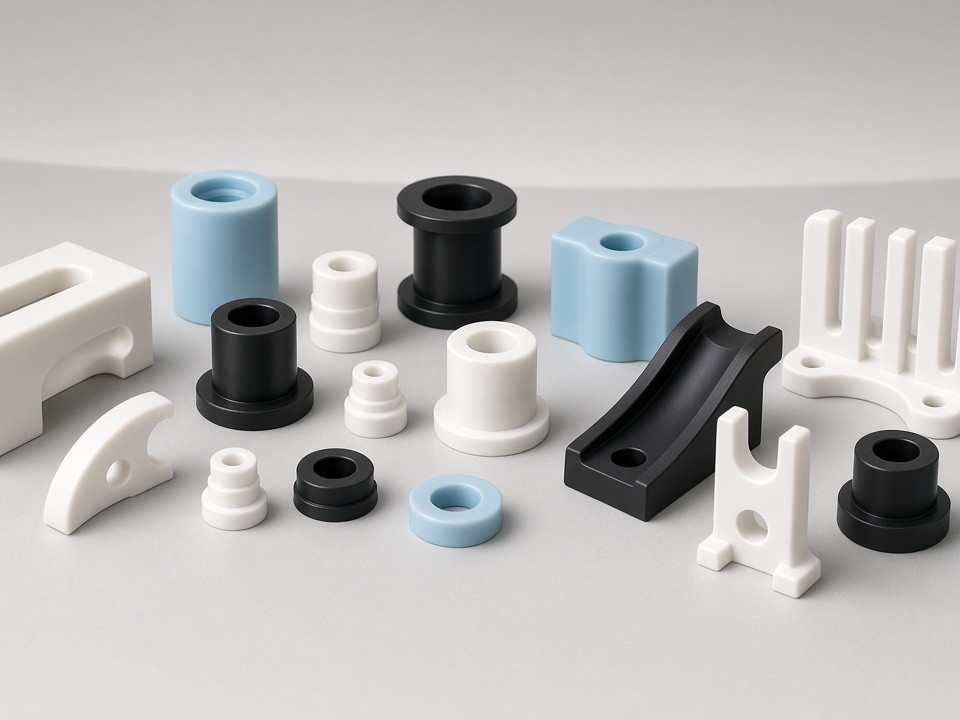
PlasticCNCPro supplies machined plastic components used in textile processing equipment. These parts handle continuous motion, fiber contact, chemical exposure, and elevated temperatures common in spinning, weaving, dyeing, and finishing lines.
- Tolerance
- ±0.05 mm
- Volumes
- Proto & Repeat
- Delivery
- Worldwide
Materials Selected for Textile Environments
Textile machinery parts often require low friction, abrasion resistance, and resistance to oils, dyes, and steam. We review application details before recommending a grade.
POM
Gears and guides requiring dimensional stability and low friction.
UHMW-PE
Wear strips and rollers with high abrasion resistance.
PEEK
High-temperature zones and demanding chemical exposure.
Antistatic Nylon / PPS
Fiber-handling sections where static control matters.
Material selection depends on load, speed, chemical contact, and dimensional stability needs.
CNC Processes Applied to Textile Components
Most textile machine parts begin with CNC milling or turning of rod, plate, or tube stock. Complex contours such as cam profiles or custom bushings are produced in single setups to maintain concentricity and repeatability across batches.
-
01
Milling & Turning
Rod, plate, and tube stock machined to form.
-
02
Drilling & Tapping
Mounting holes positioned for assembly.
-
03
Threading
Adjustment mechanisms cut to spec.
-
04
Slotting
Belt paths shaped for smooth travel.
-
05
Precision Boring
Bearing seats held to tight tolerance.
Components Commonly Produced
Supplied in prototype quantities or repeat production lots, often with custom tolerances of ±0.05 mm or tighter where required for alignment.
Discuss Your Part- Guide rollers and idlers
- Wear strips and chain tracks
- Tensioner arms and pulleys
- Thread guides and eyelets
- Bearing housings and sleeves
- Insulation plates and guards
- Custom nozzles and fittings for dyeing equipment
When CNC Machining Fits Textile Projects
- Low-to-medium volumes where injection molding tooling cost is not justified.
- Development stages before committing to molded parts.
- Quick replacement components for older machines.
- Material changes due to wear or chemical attack, moved to machined polymer versions for faster validation.
Production and Quality Steps
-
01
Drawings or samples reviewed for manufacturability.
-
02
Fixed quotation with lead time and material certification options.
-
03
Machining, then inspection for dimensions and surface condition.
-
04
Packing for export, worldwide shipment with standard commercial packaging or customer-specified crating.
Documentation such as material certificates and first-article reports is available on request.
Request a Quotation
Send 2D drawings, 3D models, material preferences, quantity, and tolerance requirements. Include the machine type or application context so we can confirm material and process suitability. We respond with pricing and production recommendations based on the information provided.
- Email: info@plasticcncpro.com
- WhatsApp:
- Address: 29 Fuxing Road, Dongguan City, Guangdong Province, China