
Custom Plastic Pump Vanes
Plastic pump vanes operate in sliding or rotating contact with housings and fluids. Material choice directly affects wear life, chemical compatibility, and dimensional stability under load and temperature.
- Flatness
- ≤ 0.05 mm
- Thickness
- ± 0.03 mm
- Low-Volume
- 50–500 pcs
- Prototype
- From 1 pc
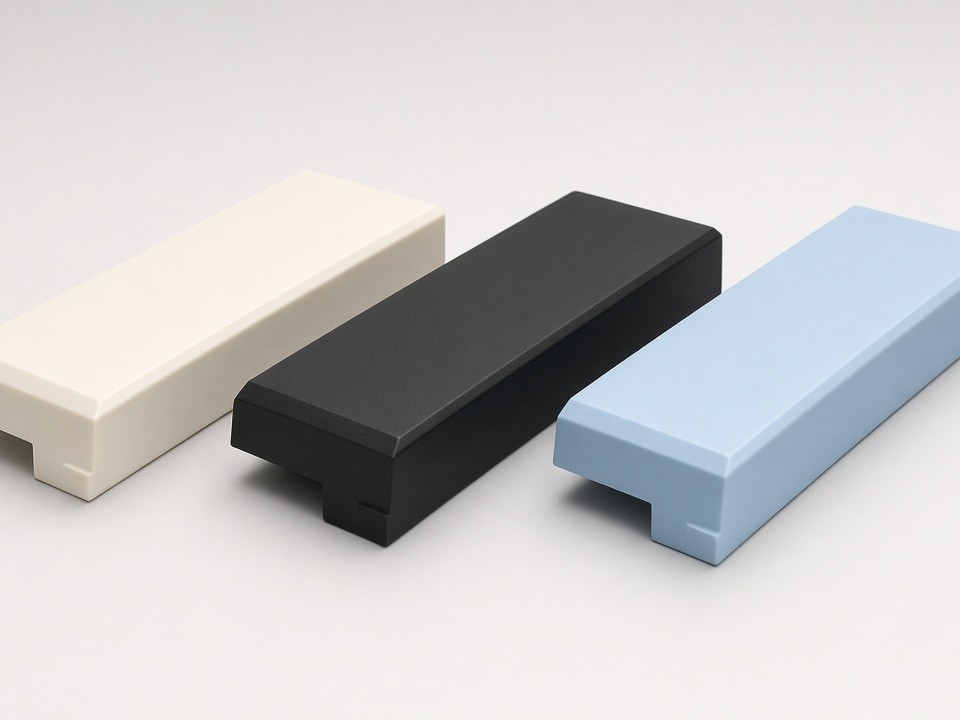
Common Materials for Pump Vanes
Selection starts with the fluid type, operating temperature, and required mechanical properties. PlasticCNCPro machines vanes from engineering polymers and filled grades that add wear resistance or reduce friction. Reinforced variants help maintain flatness where thin sections are needed.
POM
Stable, low-friction base polymer for general vane bodies.
Nylon 6/6
Tough and wear-resistant for sliding contact surfaces.
UHMW-PE
Excellent impact and abrasion performance in wet service.
PPS
Chemical resistance with good dimensional stability.
PEEK
High-temperature and high-load capability for demanding pumps.
PVDF
Strong chemical compatibility for aggressive fluids.
Filled & Reinforced Grades
Additives that reduce friction or increase wear resistance, helping maintain flatness in thin sections.
CNC Processes Used for Vane Production
All work follows customer drawings or 3D models, and each process is matched to the vane geometry and volume.
-
Milling
Creates the main profile and any slots or reliefs.
-
Turning
Produces round or cylindrical vane bodies when geometry requires it.
-
Secondary Operations
Drilling for mounting holes, tapping, and edge finishing to remove burrs that could affect sealing.
Tolerances and Surface Requirements
Flatness
Within 0.05 mm
Thickness Control
± 0.03 mm
Edge radii and surface finish affect leakage and wear. PlasticCNCPro measures parts on coordinate measuring machines and supplies inspection reports when requested.
Industries That Use Machined Plastic Vanes
Low moisture absorption grades suit applications where swelling would change clearance, while high-temperature polymers handle hot oils or steam.
Chemical Dosing Pumps
Chemical compatibility with aggressive dosing fluids.
Fuel Transfer Systems
Wear-resistant vanes for continuous fuel handling.
Food-Grade Equipment
Materials suited to hygienic processing environments.
Semiconductor Wet-Process Tools
Stable polymers for precision fluid handling in wet process steps.
Matching Process to Project Volume
Prototype quantities start from single pieces. Low-volume runs use the same fixtures and tooling as repeat orders. When annual demand grows, drawings remain unchanged so the same CNC programs apply without re-qualification.
Stage 01
Prototype
Single pieces and small batches for fit and function checks.
Stage 02
Low Volume
50–500 parts produced with the same fixtures and tooling as repeat orders.
Stage 03
Repeat Production
Unchanged drawings keep the same CNC programs in use without re-qualification.
Quality and Documentation
Material certificates, first-article inspection, and in-process checks form the standard package. Additional requirements such as specific packaging, part marking, or RoHS/REACH statements are handled before shipment.
Standard Package
- Material certificates
- First-article inspection
- In-process checks
On Request
- Specific packaging
- Part marking
- RoHS / REACH statements
Request a Quotation
Send your 2D drawing or 3D model, material specification, annual quantity, and any special tolerances or surface requirements. PlasticCNCPro reviews the files and returns pricing along with manufacturing notes.
Contact
info@plasticcncpro.com
Address
29 Fuxing Road, Dongguan City, Guangdong Province, China