Custom Plastic Sprockets
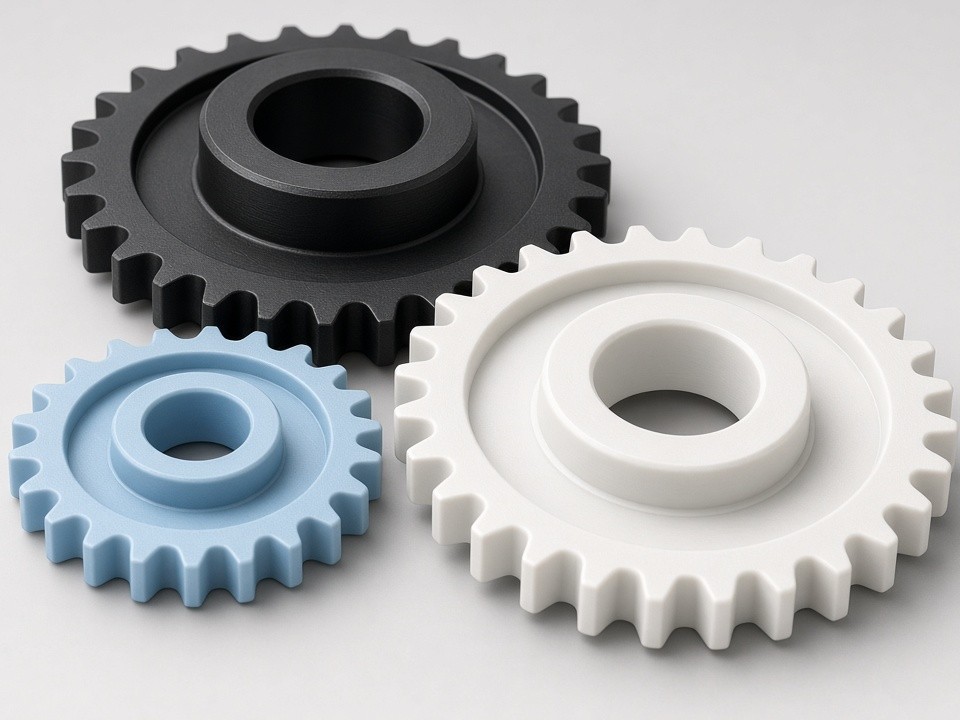
We machine plastic sprockets to customer drawings using CNC milling and turning. Parts are produced from engineering plastics and high-performance polymers for drive and conveying applications where corrosion resistance, low weight, or specific friction properties are required.
- Tooth / Pitch Tolerance
- ±0.05 mm
- Volume Range
- Prototype to Medium
CNC Processes Applied to Sprocket Geometry
Sprocket teeth, hubs, and keyways are cut on multi-axis mills and lathes. We maintain tooth profile accuracy and pitch consistency across prototype quantities and repeat production runs. Drilling, tapping, and slotting are completed in the same setup when the design requires it.
Multi-Axis Milling
Tooth profiles, hubs, and keyways cut with consistent geometry.
CNC Turning
Bores, faces, and hub diameters held to drawing.
Drilling & Tapping
Completed in the same setup when the design requires it.
Slotting
Feature work integrated into the machining sequence.
Materials Selected for Sprocket Performance
Common choices include POM, Nylon 6 and 66, UHMW-PE, PEEK, PPS, and reinforced grades. Material selection depends on load, speed, temperature range, chemical exposure, and moisture absorption limits. Our team reviews application details to match the polymer to the operating conditions.
Selection Factors
- Load and speed
- Temperature range
- Chemical exposure
- Moisture absorption limits
Achievable Tolerances and Finishes
We hold tooth-to-tooth and pitch tolerances to ±0.05 mm on most engineering plastics, with tighter control available on request. Surface finishes range from standard machined to polished or textured depending on chain engagement needs. Parts receive deburring and edge breaking as standard.
Tolerances
±0.05 mm tooth-to-tooth and pitch on most engineering plastics. Tighter control on request.
Finishes
Standard machined, polished, or textured to suit chain engagement.
Standard Edge Treatment
Deburring and edge breaking applied to every part as standard.
Industries That Specify Machined Plastic Sprockets
Equipment builders in automation, packaging, food processing, semiconductor handling, and chemical transfer use these components. Applications include conveyor drives, timing systems, and replacement parts where metal sprockets create noise, wear, or contamination issues.
Automation
Conveyor drives and timing systems with reduced noise.
Packaging
Lightweight drive components for high-throughput lines.
Food Processing
Corrosion-resistant parts for washdown environments.
Semiconductor Handling
Contamination-conscious components for sensitive equipment.
Chemical Transfer
Polymers chosen for chemical exposure resistance.
Replacement Parts
Direct replacements where metal sprockets cause wear or noise.
Machined Versus Molded Sprockets
CNC machining suits low to medium volumes, complex hub or tooth modifications, and projects that need quick design changes. It also serves as a route for validating geometry before committing to tooling for higher volumes.
CNC Machining
- Low to medium volumes
- Complex hub or tooth modifications
- Quick design changes
- Geometry validation before tooling
Molded Production
- Higher volumes
- Requires committed tooling
- Less suited to frequent design changes
Production Workflow From Drawing to Shipment
-
01
Drawing Review
Drawings or models are reviewed for manufacturability.
-
02
Quotation
Pricing with lead time and material recommendations.
-
03
Machining
Parts are machined to the approved drawing.
-
04
Inspection
Dimensional checks on critical features.
-
05
Packing & Export
Custom marking, packaging, and documentation supported.
Quality Records and Inspection
Each batch includes dimensional reports on critical features such as pitch diameter, tooth thickness, and bore. Additional documentation covers material certificates and first-article inspection when specified.
Dimensional Reports
Pitch diameter, tooth thickness, and bore recorded per batch.
Additional Documentation
Material certificates and first-article inspection on request.
Submit Files for Quotation
Send your 2D drawing, 3D model, material preference, quantity, and tolerance requirements. We respond with pricing and production feedback for prototypes or ongoing supply.
PlasticCNCPro is located at 29 Fuxing Road, Dongguan City, Guangdong Province, China.
Email: info@plasticcncpro.com