
Custom Plastic Instrument Housings via CNC Machining
PlasticCNCPro produces plastic instrument housings through direct CNC milling and turning. This approach suits projects where molded enclosures fall short on material options, tolerance requirements, or order quantity.
- Max housing length
- 0 mm
- Standard tolerance
- ±0 mm
- Tight tolerance
- ±0 mm
CNC process basics for enclosures
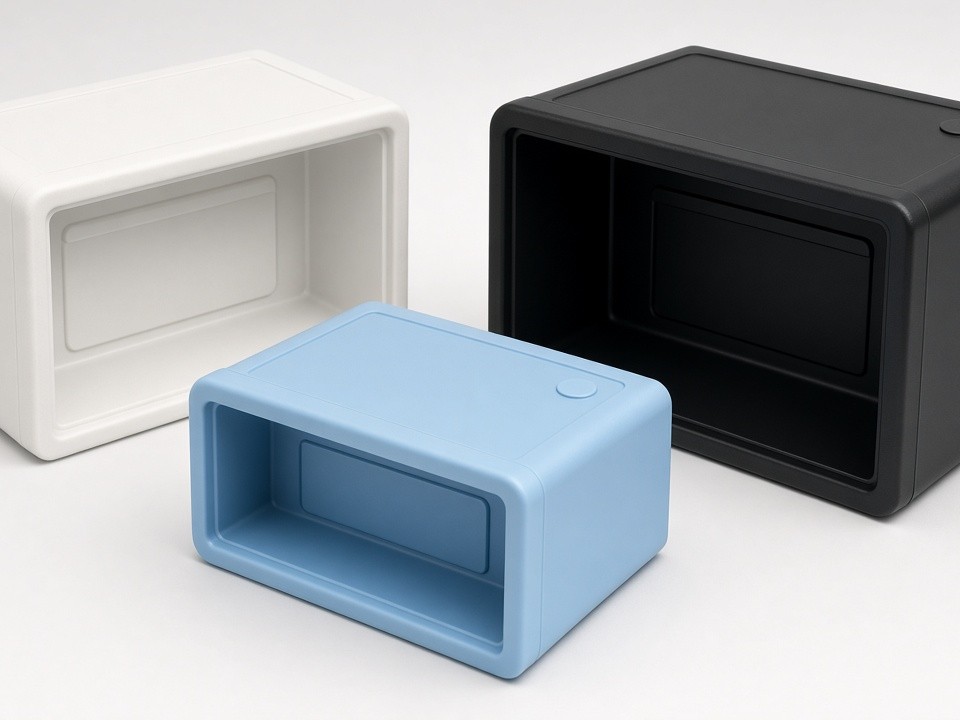
CNC machining removes material from solid plastic stock using rotating cutters and fixed tooling. For instrument housings this means creating internal cavities, mounting bosses, cable entries, and sealing faces in one or two setups. The process works with both simple rectangular boxes and housings that include angled ports or irregular external profiles.
Internal cavities
Pocketed volumes sized to your board, sensor, or module stack.
Mounting bosses
Boss locations held to tight positional control for assembly fit.
Cable entries
Straight, angled, and threaded ports machined to drawing.
Sealing faces
Flat mating surfaces finished for gaskets and environmental seals.
Milling and turning capacity for housings
Three- and five-axis milling centers handle housings up to 1200 mm in length. Turning capacity covers cylindrical enclosures and threaded ports down to 3 mm diameter. Parts receive final inspection against customer drawings before packing.
- Drilling and tapping for M2 to M12 fasteners
- Slotting for ventilation or display windows
- Engraving of serial numbers or logos
- Final inspection against customer drawings before packing
At a glance
- Axes
- 3-axis & 5-axis
- Housing length
- Up to 1200 mm
- Threaded ports
- Down to 3 mm
- Fastener range
- M2 – M12
Material choices for instrument protection
Common selections include POM for dimensional stability, ABS for impact resistance, PC for transparency needs, and PEEK or PPS for elevated temperature or chemical exposure. Filled grades add static dissipation or improved wear resistance where housings contact moving components. Material certificates accompany each batch when requested.
POM
Dimensional stability for precision fits.
ABS
Impact resistance for general enclosures.
PC
Transparency for windows and covers.
PEEK
Elevated temperature and chemical exposure.
PPS
Chemical resistance in demanding environments.
Filled grades
Static dissipation or improved wear resistance.
Tolerance and surface requirements
Standard machining holds ±0.05 mm on critical dimensions. Tighter control to ±0.02 mm is available on flat sealing surfaces and boss locations. Surface finishes range from as-machined to bead-blasted or polished. Threads receive standard or custom pitch per drawing.
Standard tolerance
±0.05 mm on critical dimensions.
Tight tolerance
±0.02 mm on flat sealing surfaces and boss locations.
Surface finishes
As-machined, bead-blasted, or polished.
Threads
Standard or custom pitch per drawing.
Project fit for prototypes and repeat runs
CNC machining supports single-piece validation before any tooling investment. It also covers ongoing orders from 10 to several hundred units where geometry changes remain possible between batches. Customers often move from machined housings to molded versions once volumes exceed 2000 pieces.
-
Single-piece validation
Prove form, fit, and function before any tooling investment.
-
10 to several hundred units
Ongoing runs where geometry changes remain possible between batches.
-
Beyond 2000 pieces
Customers often transition from machined housings to molded versions.
Industry applications
Each sector brings specific demands on chemical resistance, electrical insulation, or clean-room compatibility that influence material and finish selection.
Medical device enclosures
Clean-room compatible materials and finishes.
Laboratory analyzer panels
Chemical resistance and precise cutouts.
Semiconductor test fixtures
Static-dissipative grades where required.
Pump control boxes
Impact resistance and sealed cable entries.
Robotics sensor housings
Electrical insulation and tight boss locations.
Next step for a quotation
Send 2D drawings or 3D models along with material preference, quantity, and any tolerance or finish notes to info@plasticcncpro.com. PlasticCNCPro reviews files for manufacturability and returns a fixed quotation with lead time.
Address for sample shipments: 29 Fuxing Road, Dongguan City, Guangdong Province, China
What to include with your request
- 2D drawings or 3D models
- Material preference and filled-grade needs
- Quantity and expected repeat volume
- Tolerance and finish notes