
CNC Fixtures for Production Lines
Custom Plastic Process Fixtures
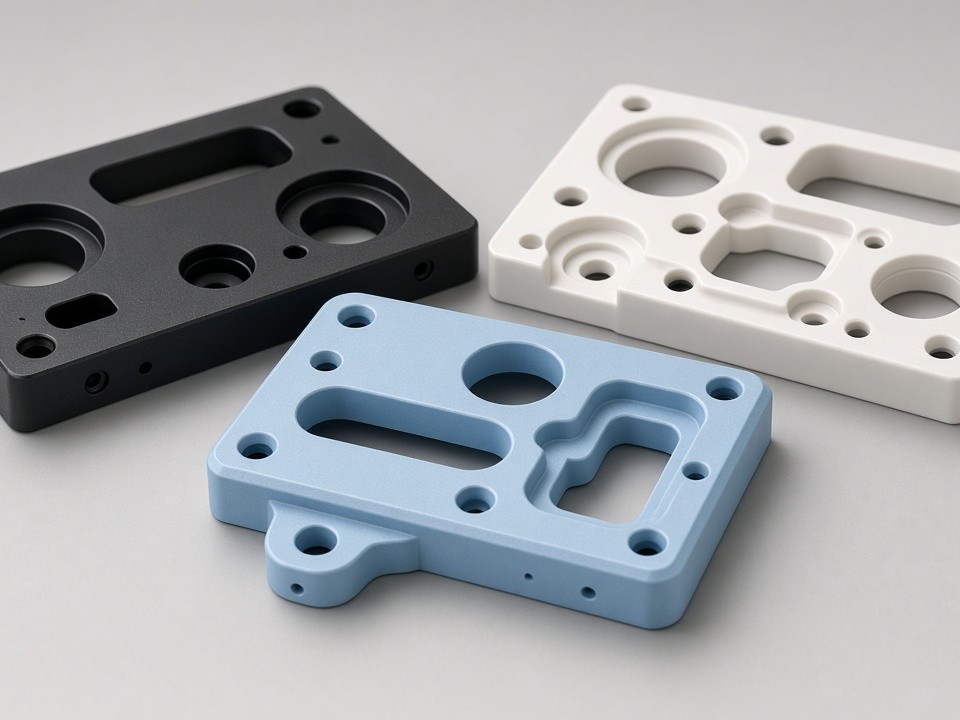
PlasticCNCPro produces plastic process fixtures through CNC milling and turning for equipment builders and production lines that need repeatable positioning, clamping, and guidance.
- Locating tolerance
- ±0.05–0.1 mm
- Surface finish
- Ra 1.6 µm+
- Repeat sets
- 20–200 nests
Fixture Requirements in Manufacturing Environments
Plastic fixtures appear in assembly stations, test rigs, and material-handling equipment where metal contact would mark parts or create static. They hold workpieces during drilling, routing, or bonding operations.
Slotted Bases
Adjustable mounting surfaces for varied part footprints.
Contoured Nests
Matched cavities that cradle complex part geometry.
Locating Pins
Repeatable datum points for consistent part seating.
Adjustable Clamps
Controlled holding force without marring the workpiece.
Tolerances on locating features typically sit between ±0.05 mm and ±0.1 mm, depending on the downstream process.
CNC Processes Used for Plastic Fixtures
All programs run on 3-axis and 4-axis vertical mills with vacuum or mechanical fixturing to avoid distortion on thin sections.
- Milling — pockets, slots, and complex profiles from plate stock.
- Turning — cylindrical rollers, bushings, and threaded standoffs.
- Drilling & tapping — mounting holes and insert locations.
- Secondary operations — countersinking, part-number engraving, and surface finishing to Ra 1.6 µm or better.
3-Axis
Vertical milling for prismatic fixture bodies and pockets.
4-Axis
Multi-face machining of nests, standoffs, and profiles.
Vacuum
Distortion-free holding for thin, flexible sections.
Mechanical
Positive clamping for stable, repeatable setups.
Materials Selected for Process Fixtures
Grade selection balances dimensional stability, stiffness, friction, chemical exposure, and static control.
Typical Project Profiles
Automation Integrators
Sets of 20–200 identical nests for new production cells.
Medical Device Manufacturers
Single-piece prototypes of inspection fixtures before committing to full tooling.
Semiconductor Equipment Suppliers
ESD-safe carriers machined from PEI or PEEK with clean-room packaging.
Legacy Packaging Lines
Replacement fixtures reverse-engineered from worn samples or 2D drawings.
Tolerance and Documentation Practices
Every project is reviewed before machining and documented through shipment.
-
Manufacturability Review
Drawings are reviewed to flag thin walls, deep pockets, and required datum schemes.
-
First-Article Reports
CMM data on critical locating surfaces confirms conformance.
-
Material Certificates
Material certificates and inspection records accompany each shipment.
-
Protective Packaging
Foam inserts or custom crates protect edges and threads during ocean freight.
Working With Existing Production Constraints
Molded fixtures warping
Many customers arrive after molded fixtures show warpage or when volumes stay below injection-molding thresholds.
Moisture-driven shifts
Others need material changes because original nylon parts absorb moisture and shift location.
Polymer re-selection
PlasticCNCPro reviews the application, suggests alternative polymers, and supplies updated drawings with revised tolerances when requested.
Request a Quotation
Send 2D drawings or 3D models, material preference, annual quantity range, and any surface or cleanliness specifications. Include the end-use environment so the team can confirm suitable grades before quoting. Production lead times start from receipt of approved drawings and samples.
- 2D drawings or 3D models
- Material preference and grade requirements
- Annual quantity range and end-use environment
- Surface finish and cleanliness specifications
Email: info@plasticcncpro.com