
PPS vs PEEK: The Complete High-Temperature Plastic Comparison
Picture this: you’re designing a seal for a chemical pump that runs continuously at 180°C, with occasional steam purges. Your first prototype — a standard nylon or PET part — barely lasted a week before it swelled, softened, and started leaking. You move to a higher-grade material, but the supplier hands you a confusing datasheet and asks, “Do you want PPS or PEEK?” Your decision could mean the difference between a component that runs for years and one that fails catastrophically every month.
That scenario is exactly why we wrote this guide. As a precision CNC machining shop, we see engineers and procurement teams wrestle with this choice constantly. PPS (polyphenylene sulfide) and PEEK (polyether ether ketone) are both elite high-temperature thermoplastics, but they are not interchangeable. In this article, I’ll break down their thermal limits, chemical resistance, mechanical strength, cost, and real-world applications. By the end, you’ll have a clear decision framework — not just a datasheet comparison — so you can pick the material that truly fits your operating conditions, budget, and manufacturing requirements.
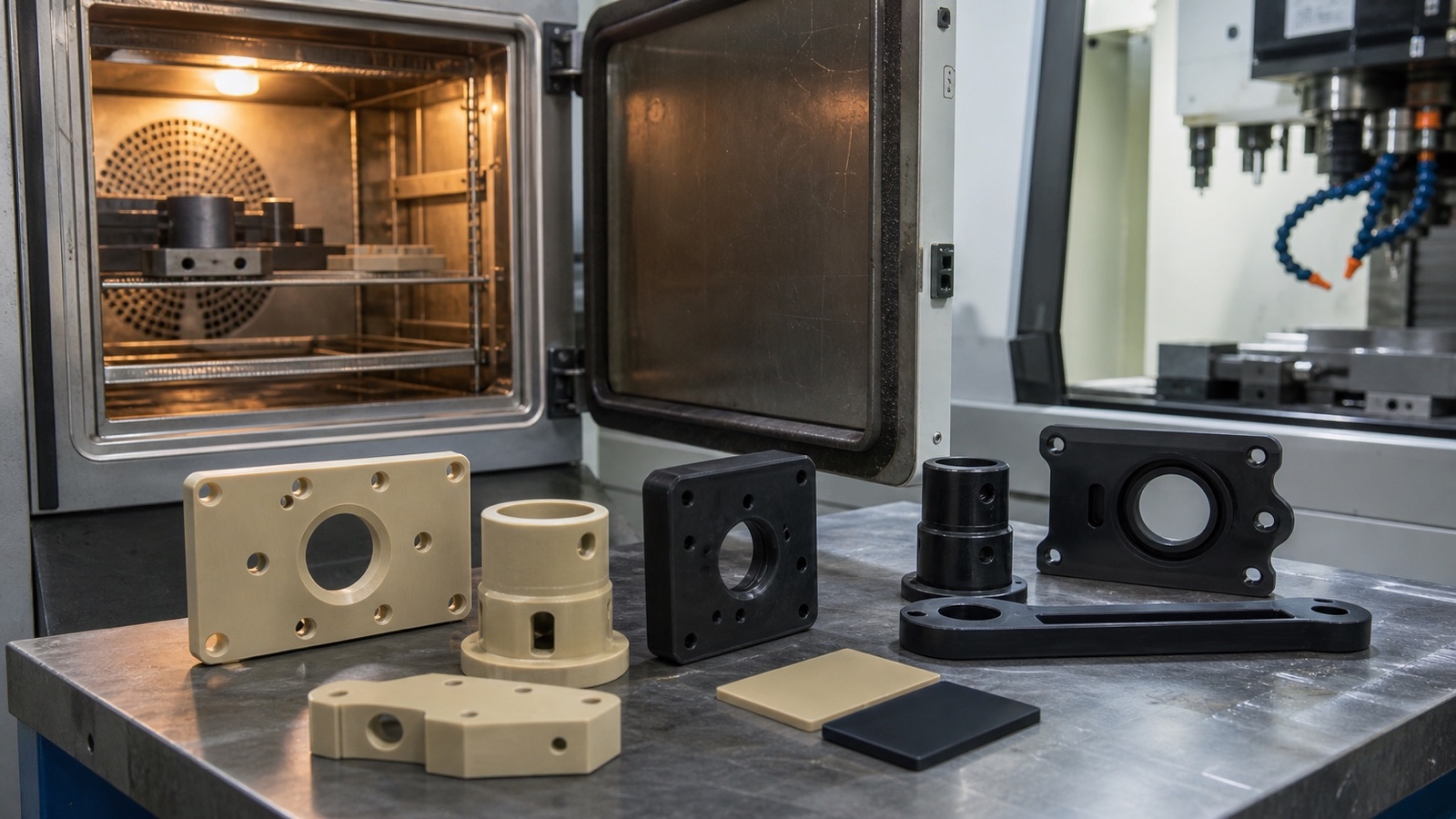
What Are High-Temperature Plastics?
Before we dive into the PPS vs PEEK question, let’s define what we’re actually talking about. A high-temperature plastic is a polymer that can withstand continuous service temperatures well above what standard engineering plastics like nylon (PA66), PET, or acetal can handle. Typically, that means a continuous service temperature of at least 150°C (302°F), and often much more. Material engineers use several benchmarks to quantify this:
- Continuous service temperature (CST): The maximum temperature a material can sustain for long periods while retaining acceptable mechanical properties.
- UL RTI (Relative Thermal Index): A standard from UL that measures long-term heat aging for a specific property, such as tensile strength or impact resistance.
- Glass transition temperature (Tg): The temperature at which amorphous regions of the polymer begin to soften. For semi-crystalline materials, the crystalline portion provides strength well above Tg.
- Heat deflection temperature (HDT): The temperature at which a test specimen deflects under a specified load (often 1.8 MPa).
High-temperature plastics outperform standard engineering plastics not just under heat, but also in aggressive chemical, friction, and wear environments. Many of them are inherently flame retardant, dimensionally stable, and resistant to hydrolysis. These properties make them essential in industries ranging from aerospace downhole tools to semiconductor wafer handling.
PPS and PEEK sit near the top of this performance hierarchy. Though they share some traits, they’re often compared with adjacent materials such as polyetherimide (PEI), polysulfone (PSU), and polyimides (PI/PAI). Each has its niche, but PPS and PEEK remain the most common choices for demanding mechanical and thermal applications — which is why the choice between them deserves careful attention.
PPS (Polyphenylene Sulfide): Profile and Performance
What Is PPS?
Polyphenylene sulfide is a semi-crystalline aromatic polymer built from phenylene rings linked by sulfur atoms. That sulfur atom in the backbone sounds simple, but it gives PPS extraordinary thermal and chemical stability. The molecular structure packs tightly into crystals, which means PPS retains its stiffness and strength at elevated temperatures far better than amorphous plastics.
PPS is also inherently flame retardant — it doesn’t need halogenated additives to achieve UL94 V-0. This makes it attractive for electrical and automotive applications where fire safety and low smoke generation are critical.
Key Strengths of PPS
- Excellent continuous service temperature: PPS typically maintains structural integrity at 200–220°C (392–428°F). With glass or carbon reinforcement, it can handle short-term spikes even higher.
- Outstanding chemical resistance: It resists a wide range of acids, bases, fuels, and solvents at room temperature and moderate temperatures. This is one of the best chemical resistance profiles among thermoplastics.
- Low moisture absorption: PPS absorbs very little water (typically < 0.05%), which means excellent dimensional stability even in humid environments. Parts don’t swell or warp the way nylons can.
- Good electrical insulating properties: PPS has stable dielectric strength and high arc resistance, making it a standard choice for connectors, bobbins, and switch components.
Key Limitations of PPS
- Brittleness and low impact strength: Unfilled PPS is inherently brittle. It can crack under impact, shock, or sharply concentrated stresses. Even filled grades are more fragile than PEEK, especially at low temperatures.
- Less resistant to high-temperature hydrolysis and steam: While PPS handles chemicals well at moderate temperatures, hot water and steam degrade it much faster than PEEK. Under repeated autoclave cycles, PPS can crack, lose toughness, and lose structural integrity.
- Higher risk of flash during injection molding: Because PPS has a low melt viscosity, it flows easily — but that also means it tends to flash or bleed into mold clearances. Molders need tight venting and precise process control. For machined parts, we see fewer issues, but the brittleness still affects edge quality.
PEEK (Polyether Ether Ketone): Profile and Performance
What Is PEEK?
PEEK is a semi-crystalline aromatic polymer with a backbone consisting of ketone and ether groups. It’s the benchmark of high-performance thermoplastics — a material that sits at the peak of the polymer pyramid. PEEK is available in several grades: neat (unfilled), 30% glass fiber reinforced (30% GF), 30% carbon fiber reinforced, and specialty blends with PTFE or graphite for wear resistance.
The combination of aromatic rings and flexible ether linkages gives PEEK an unusual balance: high melting point (~343°C), exceptional toughness, and a relatively easy-to-process melt compared to more rigid polyimides.
Key Strengths of PEEK
- One of the highest-performing thermoplastics: Continuous service temperature is roughly 250–260°C (482–500°F). Some premium grades can survive up to 300°C (572°F) in short bursts. PEEK also retains a high percentage of its room-temperature mechanical properties at elevated temperatures.
- Exceptional mechanical strength and toughness: PEEK has excellent impact resistance, elongation at break, and resistance to fatigue and creep. It’s not just strong — it’s forgiving, which makes it ideal for moving parts and high-load applications.
- Superior chemical and hydrolysis resistance: PEEK survives hot water and steam almost indefinitely. It withstands repeated autoclaving, which is why it dominates medical and food-processing applications. It also resists a broad range of acids, bases, and organic solvents, though concentrated sulfuric acid can attack it.
- Very low wear rate and self-lubricating nature: PEEK forms a smooth transfer film on mating surfaces, reducing friction and wear. In dry-running conditions, it outperforms most unfilled plastics, especially when running against metal.
- Excellent radiation resistance: PEEK can withstand gamma and electron-beam sterilization without significant degradation, making it a go-to for medical devices and nuclear-adjacent instrumentation.
Key Limitations of PEEK
- High cost: PEEK is expensive — typically three to five times more expensive than PPS on a per-kilogram basis. Depending on grade and form, prices can range from $25 to $80+ per pound.
- High processing temperatures: Injection molding PEEK requires barrel temperatures of 350–400°C (662–752°F) and die/mold temperatures around 160–200°C. That means specialized machine capabilities, higher energy consumption, and more expensive tooling.
- Limited color options and difficult bonding: PEEK is typically opaque or dark brown/black. Painting, printing, and adhesive bonding require surface treatment (e.g., plasma or sodium etch) due to its low surface energy.
PPS vs PEEK: Head-to-Head Comparison (Core Differences)
Let’s get to the direct comparison. The table below summarizes the key property differences between PPS and PEEK. Keep in mind that values vary with grade, reinforcement, and test method — but these are representative ranges we use in our CNC machining shop daily.
| Property | PPS (typical) | PEEK (typical) |
| --- | --- | --- |
| Tensile strength | 70–140 MPa (filled grades) | 90–170 MPa (filled grades) |
| Impact strength (Izod, notched) | 15–40 J/m | 80–100 J/m (neat) |
| Heat deflection temperature (HDT @ 1.8 MPa) | 200–260°C | 300–315°C (30% GF) |
| Continuous service temperature | 200–220°C | 250–260°C |
| Chemical resistance (low temp) | Excellent | Excellent |
| Chemical resistance (high temp / steam) | Moderate / poor | Excellent |
| Hydrolysis resistance | Moderate | Outstanding |
| Dielectric strength | 15–25 kV/mm | 15–20 kV/mm |
| Water absorption (24h immersion) | < 0.05% | 0.1–0.15% |
| Wear rate (unfilled) | Higher; poor | Very low; self-lubricating |
| Price index (relative, per kg) | 1x (baseline) | 3–5x |
| Processability | Easier, lower melt temp | Difficult, high melt temp |
Thermal Resistance: PPS vs PEEK
Both materials are far above standard plastics, but PEEK is the clear winner in continuous heat. PPS is rated for around 200–220°C continuous use, whereas PEEK handles 250–260°C under the same conditions. That might not sound like a huge gap, but the real difference shows up in how the materials lose mechanical properties as temperature rises.
PEEK retains a higher percentage of its tensile strength and modulus at temperatures near its service limit. For example, a 30% glass-filled PEEK can hold a significant fraction of its room-temperature strength at 200°C, while similarly reinforced PPS will show more softening and creep. This matters for anything that stays under load for months at elevated temperature — think engine components, downhole tooling, or hot chemical piping supports.
HDT numbers tell part of the story. Unfilled PPS typically has an HDT around 200°C, while glass-reinforced PPS can exceed 260°C. PEEK’s 30% GF grade reaches HDT values of about 315°C — nearly the melting point of PPS. For short-term spikes (minutes or hours), both materials can survive significantly above their continuous ratings, but PEEK will maintain structural integrity longer and with less stress relaxation.
Mechanical Strength and Toughness
If you need a rigid part that doesn’t bend, PPS with 40% glass or carbon reinforcement can give you a higher modulus than many PEEK grades. That stiffness is valuable — but it comes at a price. PPS is brittle. Impact strength, elongation at break, and resistance to crack propagation are all significantly lower than PEEK’s. If your component can experience vibration, shock loads, or any dynamic stress, PEEK’s toughness wins almost every time.
Consider a gear or a splined bushing. PPS may machine well and hold tight tolerances, but under cyclic load, it can develop microcracks at stress concentrations. PEEK, by contrast, absorbs energy through localized deformation and resists fatigue far better. In our experience, customers who switch from PPS to PEEK for moving parts often report improved service life by a factor of three to five — even in moderate heat applications — simply because PEEK doesn’t crack.
Creep is another differentiator. PEEK has lower creep under sustained loading at elevated temperatures, meaning parts stay dimensionally stable under load over time. PPS will gradually deform more, especially near its upper temperature limit.
Chemical and Hydrolysis Resistance
This is where many engineers get surprised. At room temperature or moderate temperatures (below ~100°C), PPS and PEEK both resist virtually all common solvents, acids, and bases. Neither material will dissolve in gasoline, brake fluid, or acetone. But the situation changes dramatically when you combine high temperature with water, steam, or caustic media.
PEEK is the gold standard for hot water and steam resistance. It can withstand thousands of autoclave cycles without significant loss of mechanical properties. That’s why medical instruments and food-processing seals are made from PEEK. PPS, on the other hand, is known to be vulnerable to hydrolysis at temperatures above roughly 150°C in water or steam. The sulfur linkages in the backbone are susceptible to attack by steam, leading to chain scission and embrittlement. In high-pressure steam environments, PPS parts can crack and fail in a matter of weeks, while PEEK parts keep running essentially indefinitely.
Aggressive hot acids? PEEK is also superior. Hot concentrated sulfuric acid is one of the few chemicals that attacks PEEK, but most other mineral acids, including hydrochloric and nitric, are handled better by PEEK than by PPS at elevated temperatures. For room-temperature chemical exposure, PPS is perfectly adequate and much cheaper. But if you’re designing for a chemical process that involves steam purges, hot water cleaning, or high-temperature aqueous chemistries, choose PEEK.
Electrical and Insulation Properties
Both PPS and PEEK are excellent electrical insulators across a broad frequency range. They have high dielectric strength, low dielectric constant, and low dissipation factor. Either material can be used in connectors, transformer parts, motor insulators, and high-voltage switchgear.
The key differentiator is temperature stability. PEEK can maintain its insulation properties at higher operating temperatures, making it suitable for high-current or high-temperature electrical components. PPS, however, is often preferred in certain high-voltage applications because of its excellent surface flashover resistance and tracking resistance — it resists the formation of conductive carbon paths across its surface under arc conditions. This makes PPS a popular choice for live-end components in motors, contactors, and high-voltage connectors.
PEEK also offers exceptional radiation resistance, which is important for medical or aerospace electrical components that may be exposed to gamma rays or cosmic radiation. PPS is less radiation-tolerant and can crosslink and degrade faster under high-dose ionizing radiation.
Friction, Wear, and Abrasion
Unfilled PPS is not a great bearing material. It has relatively high friction and tends to wear quickly against metals in dry applications. That’s why PPS is almost always compounded with PTFE, graphite, or carbon fibers when used in wear applications. These fillers reduce friction and transfer a lubricating film to the counterface.
PEEK, on the other hand, is naturally low-friction and wear-resistant. Even unfilled PEEK has a low coefficient of friction against steel and other metals, and it forms a smooth transfer film that protects both the part and the metal it contacts. With PTFE or carbon fiber added, PEEK becomes one of the best tribological materials available, capable of running dry at high PV (pressure-velocity) values.
For bushings, seals, gears, and sliding components where maintenance access is difficult, PEEK is almost always worth the extra cost. In applications like gear pump internals, PEEK’s lower wear rate also means fewer fine particles in the fluid stream — a huge advantage in hydraulic and semiconductor systems.
Processing and Machinability
PPS has a lower melting point (~280°C) and lower melt viscosity than PEEK, which makes injection molding faster and less energy-intensive. The material flows well into complex cavities, but that same flowability causes flash and tool wear if mold clearances aren’t carefully controlled. PPS also tends to be more abrasive when reinforced with glass or mineral fillers.
PEEK requires much higher processing temperatures — barrel temperatures between 380°C and 420°C, and mold temperatures around 160–200°C. This demands specialized injection molding machines and tooling, but the parts come out with excellent dimensional stability and low warpage. PEEK can also be compression molded or extruded.
From a CNC machining perspective, we see important differences. PPS machines nicely but can be brittle — it may chip or crack at edges, especially thin-walled sections or sharp corners. Tooling must be sharp, and feeds need to be controlled to avoid fracturing the material. PEEK, in contrast, machines cleanly and predictably. It produces excellent surface finish and can be held to tight tolerances (±0.001″ or less with careful setup). PEEK chips are curly and stringy; PPS chips are more powdery. Both require appropriate chip evacuation, but PEEK is more forgiving for complex geometries.
Cost and Economics
This is often the deciding factor. PPS is typically in the range of $5–8 per pound for standard filled grades. PEEK, depending on grade, form, and purchase volume, can be $25–80 per pound. That’s a massive gap.
But don’t stop at the raw material price. Consider total cost of ownership. A PEEK part may allow you to simplify an assembly by combining multiple components into one, eliminating seals or bearings. It may extend service life so dramatically that maintenance intervals are extended from months to years. In critical applications, the cost of downtime dwarfs the material cost — if a $0.50 PPS seal fails and shuts down a chemical production line for a day, that loss could cover a lifetime supply of PEEK.
For high-volume, moderate-temperature applications where failure isn’t catastrophic, PPS is often the smarter economic choice. For low-volume, high-reliability parts — medical instruments, aerospace brackets, downhole tools — PEEK’s cost is easily justified.
Similarities Between PPS and PEEK
For all their differences, PPS and PEEK share several important characteristics:
- Both are semi-crystalline aromatic polymers, giving them excellent dimensional stability and resistance to stress cracking.
- Both resist a broad range of aggressive chemicals at moderate temperatures.
- Both maintain mechanical integrity at temperatures far beyond standard engineering plastics.
- Both exhibit low outgassing and low flammability, with UL94 V-0 ratings achievable naturally or with minimal additives.
- Both are used in overlapping industries: aerospace, automotive, electronics, energy, and industrial equipment.
These similarities mean that in many applications, either material would work for basic mechanical support at elevated temperature. The differences show up under load, in water/steam, in wear scenarios, and at the upper end of the temperature range.
Application Guide: Where PPS Beats PEEK (and Vice Versa)
Aerospace & Automotive
PEEK is the material of choice for high-stress brackets, bearings, valve seats, and engine components that need to survive high heat and vibration while maintaining strength. Think of compressor plates, bushings in actuator systems, and thrust washers in gearboxes. PEEK is also used in aerospace hydraulic fittings and electrical connectors because of its combination of strength, temperature resistance, and chemical resistance to hydraulic fluids.
PPS, on the other hand, shines in automotive electrical and fuel systems. It’s widely used for headlamp housings, fuel system components, underhood connectors, and EGR valves. These parts face high heat (but usually below 180°C), aggressive fluids like gasoline and coolant, and tight cost targets. PPS delivers the chemical resistance and dimensional stability required at a fraction of PEEK’s price. In automotive, where millions of parts are produced annually, material cost is king.
Oil & Gas and Chemical Processing
The downhole environment — high temperature, high pressure, H₂S, brine, and hydrocarbons — is where PEEK proves its worth. PEEK is preferred for downhole tools, seals, backup rings, electrical connectors, and cable sheathing in high-pressure/high-temperature wells. Its combination of hot-water resistance and mechanical toughness means fewer failures and longer tool life in conditions that quickly destroy most polymers.
PPS is a cost-effective choice for pump parts, valve linings, and bearing cages at moderate temperatures where the media is non-aqueous or at lower temperatures (<150°C). For example, PPS valve seats in a chemical feed pump handling solvent at 120°C might work perfectly. Just avoid steam service or hot caustic solutions — in those environments, PPS will have a short life.
Electronics and Semiconductor
Semiconductor manufacturing requires materials that can withstand aggressive chemicals, ultra-pure water, and high temperatures without shedding particles. PPS is used for connectors, bobbins, switch components, and wafer carriers in relatively dry, room-temperature to moderate-heat environments. It offers good dielectric strength, dimensional stability, and lower cost — ideal for high-volume connectors and molded components.
PEEK steps in where purity and performance are critical. Wafer grippers, CMP retaining rings, wafer guides, and high-purity tubing often rely on PEEK because it can survive hot deionized water, plasma environments, and repeated exposure to harsh cleaning chemistries. PEEK’s lower wear rate also means fewer particles in cleanroom applications — a key purity advantage.
Medical and Pharmaceutical
There’s no contest here. PEEK is the dominant material for medical implants, surgical instruments, and any device that requires repeated sterilization. It is biocompatible, can be used in long-term implant applications, and withstands autoclaving, gamma sterilization, and ethylene oxide exposure without degradation. PEEK’s radiolucency also makes it useful in orthopedic fixtures where X-ray imaging is needed post-surgery.
PPS is not suitable for implantable devices. It’s generally used only for packaging, disposables, or non-critical laboratory fixtures where steam sterilization is not involved. Even then, PPS’s brittleness and limited hydrolysis resistance make it a poor choice for any reusable medical device that will see hot water or steam.
How to Choose: PPS vs PEEK Decision Framework
Rather than getting lost in datasheets, work through this decision tree. It’s the same process we use with our customers at PlasticCNCPro when they bring us a part and say, “I need something that doesn’t melt.”
- Start from service temperature. If the continuous operating temperature exceeds 220°C, PEEK is the only reliable option. If it’s below 180°C, PPS is likely sufficient — especially when reinforced.
- Assess the chemical environment. Hot water, steam, or repeated autoclave cycles? Go PEEK. Room-temperature acids, solvents, or fuels? PPS is fine and much cheaper.
- Consider mechanical loads and impacts. Moving parts, dynamic loads, impact, fatigue, or creep resistance? Choose PEEK. If the part is primarily a static structural component with no repeated stress, PPS may work.
- Check wear and friction requirements. If the part is a bearing, bushing, gear, or seal, PEEK is the safer choice, especially in dry-running conditions. PPS can work, but only with appropriate fillers and at lower load/speed limits.
- Evaluate regulatory and compliance needs. Medical, food contact, aerospace, or high-purity semiconductor environments? PEEK has the regulatory track record and testing data. PPS may not.
- Do a cost analysis, not just a price comparison. Calculate total cost, including part life, maintenance, downtime, and assembly simplification. Often, PEEK’s premium price is a fraction of the savings it delivers.
- Validate with real prototypes. Don’t rely solely on datasheet values. Machine or mold prototypes from both materials and test them under worst-case conditions — temperature cycling, chemical exposure, and load. We always recommend testing in the actual service environment, not just a lab.
This checklist covers temperature, chemical, mechanical, regulatory, price, and processability — the six pillars of any serious material selection.
Current Trends and Emerging Factors in High-Temp Plastics
The landscape for PPS and PEEK is shifting. Here are a few trends we’re watching closely:
- Sustainability and recycling: Both PPS and PEEK are being explored for mechanical and chemical recycling. Manufacturers are developing lower-carbon-footprint grades and using recycled content in non-critical applications. PEEK’s durability also supports circularity through longer part life, which reduces total material consumption.
- Additive manufacturing (3D printing): PEEK and PPS are now available as filaments and powders for FDM and SLS printing. Aerospace and medical companies are using 3D-printed PEEK for custom implants and lightweight brackets, while PPS is emerging for on-demand spare parts in chemical processing. Printing these materials is challenging — they require high-temperature printers and controlled environments — but the capability is growing rapidly.
- New compounds and blends: Material suppliers are optimizing PEEK with carbon fiber, PTFE, and graphite for specific wear and high-PV applications. PPS is increasingly blended with polyamide (PA66) or elastomers to improve ductility, with some tradeoff in heat resistance. These new grades blur the line between the two materials, so always check the actual datasheet — a compounded PPS may sometimes out-tough a neat PEEK.
- Supply chain and price volatility: PEEK and PPS prices have fluctuated in recent years due to raw material shortages, energy costs, and shifting production capacity. PEEK is still mostly produced by a handful of global suppliers, while PPS has more diversified capacity. This impacts lead times and long-term procurement strategy.
- Digital simulation: Injection molding simulation tools are now accurate enough to predict flash, warpage, and fiber orientation for PPS and PEEK. This is helping molders optimize gate locations and cooling channels, reducing trial-and-error costs. For CNC machining, we use in-house simulation to check tool path strategies that minimize stress and vibration in these harder-to-machine polymers.
Frequently Asked Questions
Is PEEK stronger than PPS?
At room temperature, both materials can be strong, but the type of strength differs. PPS with high glass or carbon fiber loading can have higher tensile modulus (stiffness) than PEEK. However, PEEK is significantly stronger in terms of toughness, impact resistance, and elongation at break. At elevated temperatures — above 150°C — PEEK retains much more of its room-temperature mechanical properties than PPS. So if “strong” means resistance to cracking, impact, and fatigue in a hot environment, PEEK wins decisively.
What is the maximum temperature for PPS vs PEEK?
For continuous service, PPS is rated at approximately 200–220°C (392–428°F), depending on grade and reinforcement. PEEK is rated at 250–260°C (482–500°F) for standard grades, with some premium grades capable of up to 300°C (572°F) in short-term exposure. Both materials can handle temporary spikes of 20–40°C above their continuous ratings, but you should never design for those spikes as a regular condition. Always check the UL RTI for your specific application and safety factor.
Can I substitute PPS with PEEK (or vice versa) in my design?
Substitution is not always one-to-one. You can often replace PPS with PEEK — you’ll gain impact strength, wear resistance, and hot-water resistance, but you’ll pay significantly more. Replacing PEEK with PPS is riskier. You must confirm that temperatures are below 220°C, that no steam or hot-water exposure exists, and that impact and wear requirements can be met. Dimensional changes and processing differences mean you should always revalidate the design with prototype testing. We see too many engineers make a straight swap without checking hydrolysis resistance and then deal with premature failure.
Why is PEEK so expensive?
PEEK’s price comes down to its chemistry and production scale. The monomers used to synthesize PEEK are proprietary and expensive to manufacture. The polymerization process requires very high purity and precise control to achieve the desired molecular weight. PEEK production is also limited to a relatively small number of facilities worldwide, and demand continues to grow faster than supply. All of this pushes the cost per kilogram to $25–80, versus $5–8 for PPS. That’s the price you pay for PEEK’s unmatched combination of thermal, mechanical, and chemical performance.
Which material is better for medical or food-contact applications?
PEEK is the clear leader. It is biocompatible (ISO 10993 compliant, commonly used in implants), can withstand repeated sterilization, and has FDA-compliant grades for food contact. Its hydrolysis resistance makes it safe for hot water and steam cleaning. PPS, while it may have certain food-contact approvals for specific applications, is not a standard choice for medical devices due to brittleness and poor steam resistance. If you’re designing anything that touches the body or requires frequent sterilization, choose PEEK.
Conclusion
Choosing between PPS and PEEK really comes down to the demands of your application. PEEK is the maximum-performance material — it survives higher temperatures, tougher mechanical loads, hotter chemicals, and steam. It’s the material you choose when failure is not an option. PPS is the balanced workhorse — it handles substantial heat and chemical exposure at a fraction of PEEK’s cost, and for many applications, it’s the right engineering choice.
There is no universal “best.” The material that wins is the one that meets your service requirements, fits your budget, and can be reliably manufactured into your part geometry. That’s why we always recommend an engineering review before any decision — and why we work with customers to evaluate materials based on real-world conditions, not just datasheet numbers.
At PlasticCNCPro, we specialize in precision CNC machining of PPS, PEEK, and all the other high-performance polymers in between. We machine everything from prototype PEEK seals for downhole oilfield tools to production PPS connectors for automotive electronics. We know how these materials behave on the spindle, under the end mill, and in the real world.
If you’re facing the PPS vs PEEK decision — or if you already know the material but need to machine it to tight tolerances — send us your drawing, 3D model, or project requirements. We’ll review your design, recommend the best material for your heat, chemical, and mechanical environment, and provide a quotation with production recommendations. Whether you need a single prototype or a repeat production run, we’re ready to help you make the right part — and the right material choice — the first time.
Contact PlasticCNCPro today for a consultation or a quote. Your next high-temperature component starts with a smarter material decision.
RFQ Support
Send Your Drawing for a Quote
Share your 2D drawing, 3D model, material, quantity, tolerance, surface finish, and application details. Our team will review manufacturability and reply with a practical quotation.
Email: info@plasticcncpro.com
Address: 29 Fuxing Road, Dongguan City, Guangdong Province, China