
Custom Plastic Yarn Guides
Plastic yarn guides direct filament, thread, or wire in textile winding, braiding, and processing equipment. These parts require smooth contact surfaces, stable dimensions under tension, and resistance to wear from continuous motion.
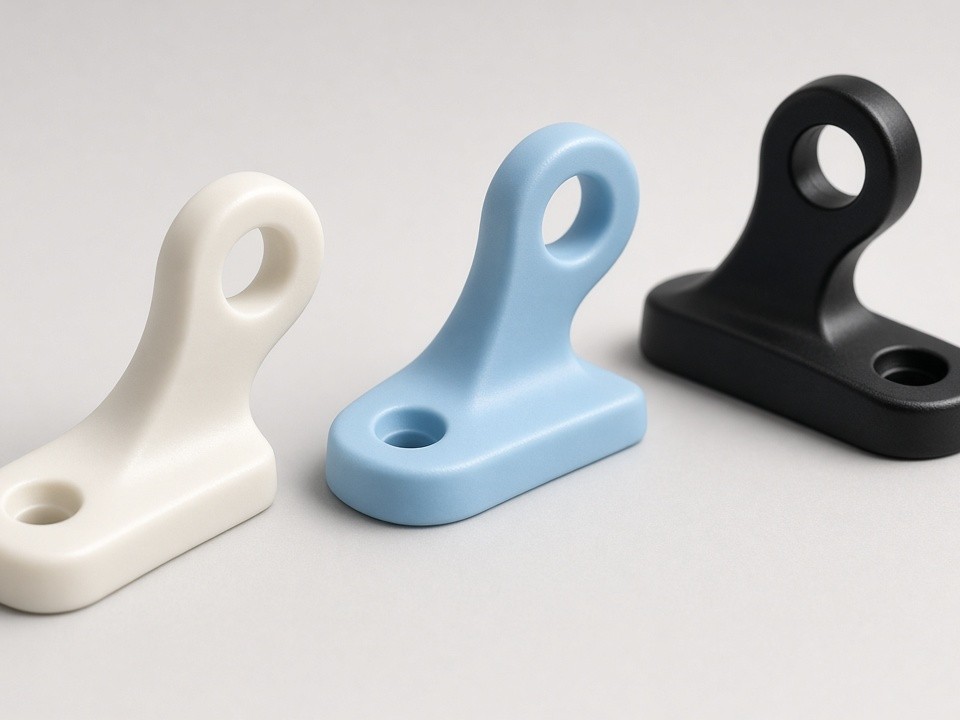
Machining Process for Yarn Guides
CNC milling and turning produce yarn guides from solid plastic stock. The process begins with material selection driven by load, speed, and chemical exposure, then follows 3D models or 2D drawings to form grooves, radii, and mounting holes.
-
01 · Material Selection
Matched to load, speed, and chemical exposure.
-
02 · CNC Milling & Turning
Tool paths follow 3D models or 2D drawings to create grooves, radii, and mounting holes.
-
03 · Secondary Operations
Drilling, tapping, and surface finishing to reduce friction.
-
04 · Inspection
Dimensional accuracy verified before packing.
Our Production Capabilities
PlasticCNCPro machines yarn guides in quantities from single prototypes to repeat batches. Standard lead times run 7–15 days after order confirmation, depending on material availability and complexity. We hold tolerances to ±0.05 mm on critical features such as guide diameters and slot widths, with surface finishes reaching Ra 0.8 µm on contact areas. Export packaging uses foam inserts and moisture barriers for sea or air freight.
Prototypes to repeat production batches
7–15 days after order confirmation
Foam inserts and moisture barriers for export
Material Options
Low friction and dimensional stability.
High wear resistance in high-speed lines.
For elevated temperature or chemical exposure.
Cost-sensitive applications; filled grades available.
Where chemical resistance is required.
Typical Parameters for Plastic Yarn Guides
Standard ranges below; tighter tolerances and custom sizes are available on request.
| Parameter | Standard Range | Notes |
|---|---|---|
| Outer diameter | 10–150 mm | Custom sizes available |
| Guide groove radius | 0.5–5 mm | Polished to reduce filament damage |
| Mounting hole diameter | M3–M12 or clearance | Threaded or plain |
| Wall thickness | 3–20 mm | Adjusted for load requirements |
| Tolerance on critical dims | ±0.05 mm to ±0.1 mm | Tighter on request |
| Surface roughness | Ra 0.8–1.6 µm | Contact surfaces finished smoother |
| Operating temperature | −40 °C to +120 °C | Material dependent; verified per grade |
Project Fit and Material Selection
Yarn guides appear in textile looms, wire winding machines, and automated handling systems. Buyers often replace metal guides with plastic versions to lower weight and eliminate corrosion.
When switching from injection-molded parts, CNC machining allows design adjustments without tooling costs. We review drawings for manufacturability and suggest material changes if moisture absorption or heat deflection affects performance.
Plastic guides replace metal to reduce rotating and moving mass.
Eliminates rust and chemical attack common to metal guides.
Design adjustments without injection mold investment.
Material suggestions for moisture absorption or heat deflection.
Request a Quotation
Send your 2D drawing, 3D model, material preference, annual quantity, and any special surface or tolerance requirements. Include application details such as line speed, filament type, and environmental conditions. We respond with pricing, lead time, and any recommended design changes within two business days. Samples can be produced before full release.
- 2D drawing or 3D model
- Material preference and annual quantity
- Surface, tolerance, and application details
PlasticCNCPro
29 Fuxing Road, Dongguan City, Guangdong Province, China