Precision Polymer Machining
Custom Plastic Mixer Paddles CNC Machined to Specification
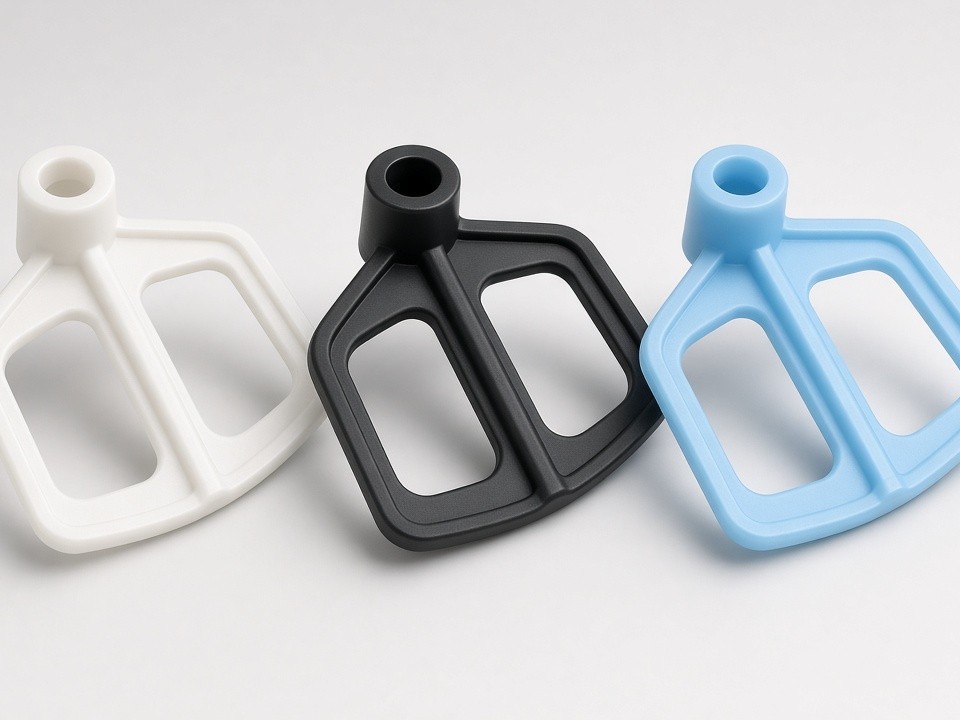
Plastic mixer paddles move material in tanks, reactors, and blenders where metal contact must be avoided. CNC machining produces these parts from solid stock, allowing complex blade shapes, hub bores, and mounting features without tooling investment.
- Max length
- 1200 mm
- Max width
- 400 mm
- Concentricity
- 0.05 mm
- Batch size
- 1 – 300 pcs
How CNC Machining Supports Mixer Paddle Production
CNC milling and turning remove material from plate, rod, or block to create paddle profiles that match existing shaft dimensions or new equipment layouts. This method handles both one-off validation parts and batches up to a few hundred units.
Edge radii, slot widths, and balance cuts are held to the same drawing as the final production parts.
-
01
Blade contour milling
Profiled surfaces machined to drawing geometry.
-
02
Hub bore & keyway turning
Shaft fits held concentric with blade tips.
-
03
Drilling & tapping
Mounting features placed to drawing positions.
-
04
Slots, weep holes & ribs
Added for reduced weight or improved flow.
Manufacturing Capabilities at PlasticCNCPro
We machine plastic mixer paddles from round bar, square stock, or pre-cut blanks. Parts up to 1200 mm long and 400 mm wide fit our vertical and horizontal mills.
Stock forms
- Round bar
- Square stock
- Pre-cut blanks
- Plate, rod, or block
Standard operations
- Contour milling of blade surfaces
- Drilling and tapping of mounting holes
- Turning of shaft bores or keyways
Accuracy & finish
- Concentricity within 0.05 mm on most polymer grades
- As-machined to 0.8 µm Ra after light finishing passes
- Visual and dimensional check before packing
Materials Commonly Used for Mixer Paddles
Selection depends on chemical exposure, temperature, and abrasion. We review chemical compatibility and mechanical loads before recommending a grade.
POM
Good stiffness and low moisture uptake for general mixing.
UHMW-PE
Resists wear in abrasive slurries.
PEEK & PPS
Continuous temperatures above 150 °C and aggressive solvents.
PTFE & PVDF
Suited to highly corrosive environments.
Glass-filled grades
Additional rigidity where the application requires it.
Carbon-fiber grades
Higher stiffness options for demanding mixing duties.
Typical Specifications
Standard ranges for CNC machined plastic mixer paddles.
| Parameter | Standard Range | Notes |
|---|---|---|
| Overall length | 150 – 1200 mm | Longer parts quoted case-by-case |
| Blade thickness | 6 – 40 mm | Thinner sections require fixturing review |
| Hub bore tolerance | ±0.03 mm | Keyway width held to ±0.05 mm |
| Surface roughness | 1.6 – 3.2 µm Ra (as machined) | 0.8 µm Ra available on request |
| Material thickness variation | ±0.1 mm | Measured across blade faces |
| Quantity range | 1 – 300 pcs per order | Prototype pricing separate from repeat runs |
Matching Process to Project Stage
The same machining program scales from validation parts to replacement production, so dimensions stay consistent as a project develops.
-
Early-stage equipment builders
Often start with a single machined paddle for fit and flow testing.
-
Dimension stabilization
Once dimensions stabilize, the same program runs low-volume batches while the customer evaluates molded alternatives.
-
Replacement paddles
Produced for older mixers from supplied samples or reverse-engineered drawings when original tooling no longer exists.
Request Pricing and Lead Time
Send your drawing or sample along with material preference, quantity, and any special packaging needs. We return a fixed quotation that lists material, machining operations, inspection steps, and estimated delivery.
- Drawing, sample, or reverse-engineered dimensions
- Material preference and quantity
- Special packaging requirements
For current capacity and pricing on plastic mixer paddles, contact us at info@plasticcncpro.com.